What Is Bidirectional Charging?
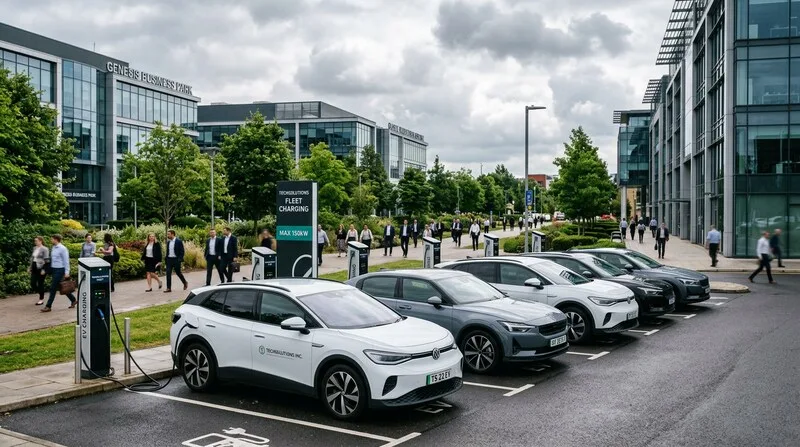
Standard EV charging is one-directional: power flows from the grid (or solar panels) into your car's battery. Bidirectional charging reverses this flow — allowing energy stored in your EV's battery to flow back out, either to your home or to the electrical grid. This transforms an EV from a pure energy consumer into an active participant in the energy system.
Three related but distinct concepts fall under the bidirectional umbrella:
- V2G (Vehicle-to-Grid): Your EV exports power back to the public electricity grid, typically managed by your utility provider during peak demand periods.
- V2H (Vehicle-to-Home): Your EV powers your house during a grid outage or when electricity prices are high, acting as a large backup battery.
- V2L (Vehicle-to-Load): Your EV powers appliances or devices directly via a standard outlet built into or connected to the car — camping equipment, power tools, emergency devices.
How the Technology Works
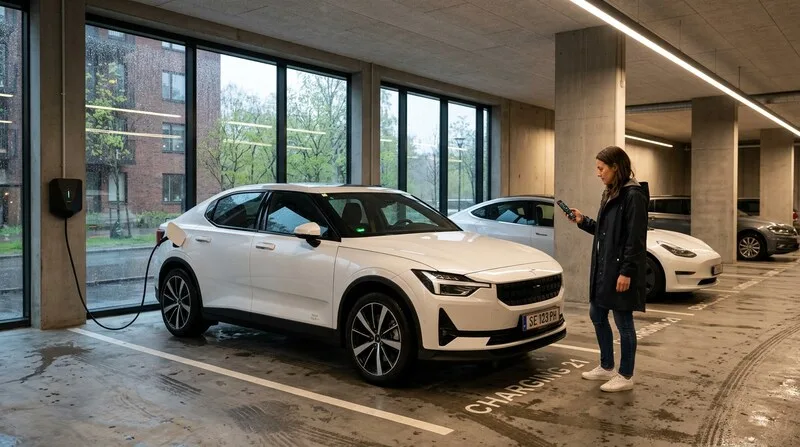
Standard EV charging uses the car's onboard charger (OBC) to convert AC grid power to the DC voltage the battery requires. For bidirectional charging, a more complex system is needed: either a bidirectional onboard charger (built into the car) or an external bidirectional DC-coupled inverter.
The key technical standard enabling V2G and V2H is ISO 15118, specifically the "Plug and Charge" and power export extensions of this protocol. The newer ISO 15118-20 standard explicitly includes bidirectional power transfer and is designed to work with both CCS and NACS connectors.
For V2H specifically, the system also requires a transfer switch at your home's electrical panel — this isolates your home from the grid during outage conditions, preventing dangerous back-feed to utility workers.
Which Cars Support Bidirectional Charging?
Bidirectional capability is not universal — it requires specific hardware investment during vehicle design. As of 2026, confirmed V2H/V2G-capable vehicles include:
- Nissan LEAF (with CHAdeMO): The original V2H-capable EV via CHAdeMO DC port — works in Japan and with compatible UK/EU equipment. CHAdeMO is being phased out in the US.
- Ford F-150 Lightning: V2H via Ford's Pro Power Onboard system — up to 9.6 kW output, enough to power an average home for several days. One of the most practical V2H implementations currently available in the US.
- Hyundai IONIQ 5 and IONIQ 6: V2L standard (up to 3.6 kW via vehicle-side outlet). V2H capability via external inverter available in select markets.
- Kia EV6 and EV9: V2L standard. V2H in select configurations.
- Volkswagen ID. range (ID.3, ID.4, ID.7): Bidirectional charging via CCS announced and rolling out for European market; US timeline confirmed for 2025–2026 models.
- Volkswagen ID. Buzz: V2H capability via compatible bidirectional wallbox in select European markets.
- Genesis GV60, GV70 EV, Electrified G80: V2L capable.
Tesla currently does not support V2H or V2G via NACS, though the technical capability exists in the hardware. Tesla has stated bidirectional charging is under consideration for future software updates and hardware revisions.
Hardware Required
Setting up a home V2H system requires more than just a compatible EV:
- Bidirectional EVSE / wallbox: A standard Level 2 charger cannot send power back to your home. You need a dedicated bidirectional unit (examples: Wallbox Quasar 2, Ford Charge Station Pro with Home Integration System, SolarEdge EV Charger with bidirectional capability). Cost: $1,500–5,000.
- Transfer switch / home integration system: Required to safely isolate your home from the grid during backup power operation. Ford's Home Integration System includes this. Cost: $1,000–4,000 installed.
- Utility agreement: For V2G (selling power to the grid), you need a compatible utility tariff and grid agreement. V2H does not require this — it only uses your car's battery for your own home.
Total installed cost for a V2H system typically runs $3,500–10,000 depending on equipment and existing panel capacity. Ford's F-150 Lightning with the Home Integration System is currently the most turnkey and cost-effective option in the US market.
V2G Pilot Programs and Economics
True V2G — where your car earns money by selling power back to the grid at peak times — is still in active pilot phases in most markets:
- UK: Octopus Energy's "Power Pack" and OVO Energy's V2G tariff allow compatible vehicles to sell electricity back at peak rates (up to £0.50/kWh) and charge at off-peak rates (as low as £0.075/kWh). Theoretical annual earnings of £500–1,500 are cited by early adopters, though real-world numbers depend heavily on grid operator demand patterns.
- US: Pacific Gas and Electric (PG&E) EPIC2 pilot, Vermont's Green Mountain Power EV battery program, and several utility-led projects are testing V2G economics. No widespread commercial V2G tariff exists yet in the US as of 2026, but rollout is actively in progress.
Does V2G Damage Your EV Battery?
Battery degradation from V2G use is a legitimate concern. More charge-discharge cycles do incrementally increase degradation. However:
- Modern battery management systems are designed to minimize degradation from shallow cycles (20–80% range)
- V2G programs typically operate within a 20–80% state-of-charge window specifically to protect battery longevity
- Early data from Nissan LEAF V2H users in Japan shows minimal additional degradation versus non-V2H use over several years
- Most V2G program operators offer battery degradation guarantees or compensation structures
The consensus from current research is that well-managed V2G use within programmed SOC limits does not meaningfully shorten battery life beyond normal charging use. The technology is evolving, and degradation monitoring is a standard part of commercial V2G program design.
The Future: NACS + ISO 15118-20
The combination of the NACS connector standard (SAE J3400) and the ISO 15118-20 bidirectional protocol is expected to make V2H and V2G far more widely available from 2026 onward. As more automakers implement bidirectional hardware in new models and utilities develop compatible tariff structures, the EV-as-home-battery model will move from niche pilot to mainstream feature within the next 2–4 years.
For now, the most practical route to bidirectional home energy is the Ford F-150 Lightning (V2H up to 9.6 kW, turnkey with Ford's Home Integration System) or a Hyundai IONIQ 5/6 or Kia EV6 for V2L applications requiring smaller loads.