
Why Home Charging Changes Everything
The single biggest difference between owning an EV and a gas car is this: you never have to stop at a gas station for your daily driving. You plug in at home, and your car is full every morning. Roughly 90% of all EV charging sessions in the US happen at home, according to the Department of Energy. Understanding your home charging options is therefore the most important EV decision most owners ever make.
Level 1 vs Level 2: What Is the Difference?
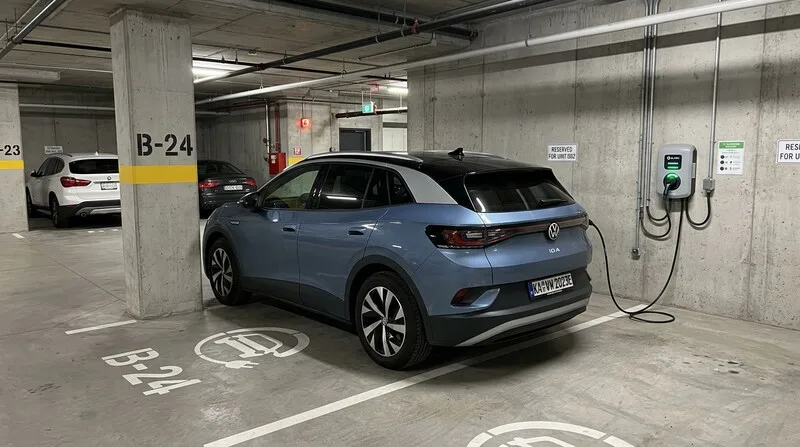
| Feature | Level 1 | Level 2 |
|---|---|---|
| Voltage | 120V (standard outlet) | 240V (dryer outlet) |
| Power output | 1.2–1.9 kW | 7.2–19.2 kW |
| Range added per hour | 3–5 miles | 25–40 miles |
| Full charge time (70 kWh) | 40–60 hours | 4–10 hours |
| Installation cost | $0 (existing outlet) | $400–1,300 total |
| Best for | PHEVs, low daily mileage | All EVs, daily drivers |
Is Level 1 Charging Ever Enough?
Level 1 — plugging into a standard 120V household outlet with the included portable charger — adds roughly 3–5 miles of range per hour. If you drive fewer than 30–40 miles per day and have 8+ hours at home, Level 1 can theoretically work. In practice, most EV owners find Level 1 stressful: a cold day, an unplanned extra trip, or forgetting to plug in leaves the car short. Level 1 is best treated as an emergency backup, not a daily solution.
PHEVs (plug-in hybrids with smaller batteries, typically 10–20 kWh) are the exception: Level 1 can fully charge a PHEV battery overnight without issue.
How Much Power Do You Actually Need?
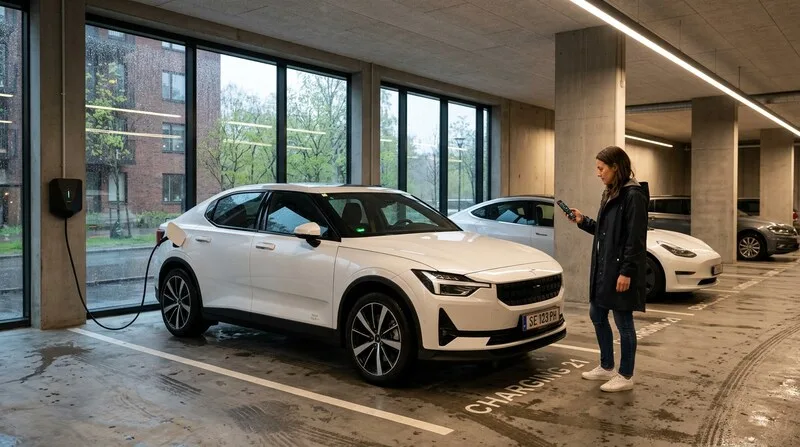
The right Level 2 charger size depends on your driving habits:
- Under 40 miles/day: A 7.2 kW (32A) charger fully replenishes overnight — perfectly sufficient for most households
- 40–80 miles/day: 9.6–11.5 kW (40–48A) gives comfortable buffer; highly recommended
- Over 80 miles/day or two EVs: 11.5–19.2 kW (48–80A) or a second circuit; essential for high-mileage drivers
Note: your EV's onboard charger sets the maximum AC charging rate. A Tesla Model 3 Long Range accepts up to 11.5 kW; a base Chevy Bolt accepts 7.2 kW. Buying a 19.2 kW charger for a 7.2 kW car adds no benefit.
Top Home Wallboxes in 2026
- ChargePoint Home Flex: 16–50A adjustable, WiFi, smart scheduling, works with all EVs — the most flexible option at $550–650. NACS and J1772 versions available.
- Emporia EV Charger: 48A, energy monitoring, excellent app, competitively priced at $400–480. Best value for smart charging features.
- JuiceBox 40/48: 40A or 48A, Amazon Alexa compatible, utility rebate programs — around $500–600.
- Tesla Wall Connector (Gen 3): 48A, seamless Tesla integration, also works with other EVs via J1772 adapter. About $450 installed for Tesla owners.
- Grizzl-E Classic: Simple, rugged, no WiFi, 40A, best for owners who just want reliable charging without app complexity. About $350.
Installation Costs: What to Expect
The total cost of a home Level 2 setup depends on your electrical panel and garage situation:
- Charger unit: $300–700 depending on brand and amperage
- Electrician labor: $200–500 for a straightforward 50A circuit in a garage near the panel
- Panel upgrade (if needed): $1,500–3,500 — only required if your current panel is fully loaded (rare in homes built after 1990)
- Conduit and trenching (outdoor runs): $500–2,000 — necessary only for detached garages or long cable runs
For most single-family homeowners with an attached garage, total installation cost is $500–1,200. Get at least two electrician quotes — pricing varies significantly by region.
Federal Tax Credits and State Incentives
The Alternative Fuel Vehicle Refueling Property Credit (30C) under the Inflation Reduction Act provides a federal tax credit of 30% of installation costs, up to $1,000 for residential EV charging equipment. This applies to the charger unit and installation labor. Income limits do not apply to this credit (unlike the EV purchase credit).
Many states and utilities offer additional incentives:
- Utility rebates: Pacific Gas and Electric, Con Edison, Xcel Energy and many others offer $200–500 rebates for qualifying charger installation
- State programs: California, Colorado, New York, and Massachusetts have active programs; check your state energy office
- Time-of-use (TOU) rates: Most utilities offer overnight electricity at significantly lower rates — charging from 11 PM to 7 AM can cut charging costs 30–50%
Smart Charging: Time-of-Use and Scheduling
All modern WiFi-connected wallboxes support scheduled charging. Set your charger to start at 11 PM (or whenever your off-peak window begins) and charging costs can drop significantly. On a TOU plan with $0.12/kWh overnight vs $0.32/kWh peak, charging a 75 kWh battery costs $9 overnight vs $24 at peak — a $15 difference every full charge.
Smart chargers (ChargePoint, Emporia, JuiceBox) also track energy usage, integrate with home energy management systems, and support demand charge avoidance for homes with solar panels.
Renters and HOA Situations
Home charging is not only for homeowners. Key points for renters and condo/HOA residents:
- HOA charging rights: California, Florida, Colorado, and 15+ other states have passed "Right to Charge" laws limiting HOA restrictions on EV charging installation
- Renters: You can request a Level 2 outlet from your landlord; in some states landlords cannot unreasonably refuse
- Portable Level 2 chargers: Units like the Lectron Vesta work from a 240V dryer outlet without permanent installation — useful for renters
- Apartment charging: Many apartment complexes are adding shared Level 2 stations; ask your property manager about NEVI-funded programs