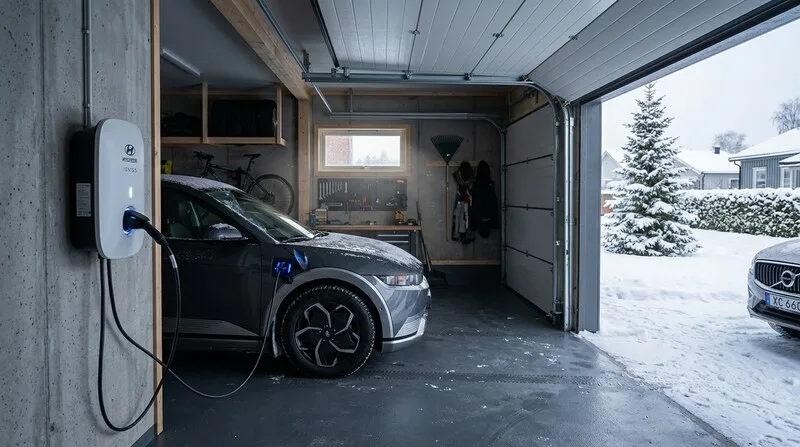
What Is NACS?
NACS stands for North American Charging Standard. Originally Tesla's proprietary connector — internally called the "Magic Dock" connector — it was submitted to SAE International in 2022 and formally standardized as SAE J3400 in 2023. NACS is now the official DC fast charging standard for the United States and Canada, replacing CCS1 (the Combined Charging System Type 1 connector previously used by most non-Tesla EVs).
The shift happened remarkably fast. Within 18 months of Tesla opening the standard, every major US automaker announced NACS adoption. For EV drivers, this means one port, one cable, access to the largest fast charging networks in North America.
How NACS Became the US Standard: A Brief History

The story begins in 2022, when Tesla announced it would open its connector design to the industry. At that point, Tesla's Supercharger network — with around 17,000 stalls in the US — was already the largest and most reliable DC fast charging network in the country. The connector itself is smaller and lighter than CCS1, handles both AC and DC charging in a single port, and supports higher voltages.
- November 2022: Tesla opens the NACS connector specification to other manufacturers
- May–June 2023: Ford and GM announce NACS adoption for future models
- Summer 2023: Rivian, Polestar, Volvo, Mercedes-Benz, Nissan, Honda, Toyota follow
- June 2023: SAE International begins standardization as J3400
- September 2023: SAE J3400 published — NACS becomes an official standard
- 2024–2025: New vehicles from Ford, GM, Rivian begin shipping with native NACS ports
- 2026: NACS is the default for nearly all new US EVs; Electrify America, EVgo, ChargePoint adding NACS cables to networks
Which Cars Already Have NACS?
As of 2026, these brands ship new US models with a native NACS port:
- Tesla: All models (Model 3, Y, S, X, Cybertruck)
- Ford: Mustang Mach-E, F-150 Lightning, Explorer EV (2025+)
- General Motors: Chevrolet Equinox EV, Blazer EV, Silverado EV; Cadillac Lyriq, Optiq
- Rivian: R1T, R1S, EDV commercial vans (2025+)
- Honda / Acura: Prologue, ZDX (2024+)
- Nissan: Next-generation LEAF and Ariya successors
- Toyota / Lexus: Upcoming EV models from 2025 model year onward
- Volvo / Polestar: Transitioning 2025+ models
- Mercedes-Benz: US-spec models from 2025
What About CCS1 Vehicles? Adapter Options
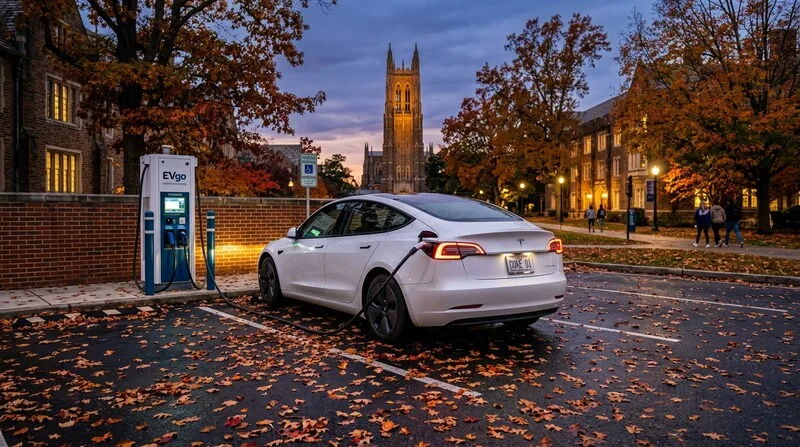
If you currently drive a CCS1-equipped EV — such as a Hyundai IONIQ 5, Kia EV6, BMW iX, or older Chevy Bolt — you are not left behind. Several adapter options exist:
- NACS-to-CCS1 adapters: Tesla sells an official adapter that lets CCS1 vehicles charge at Superchargers. Other third-party adapters are also available.
- CCS1 at NACS-only stations: Electrify America, EVgo, and ChargePoint are adding NACS cables alongside existing CCS1 cables at stations. Most stations will have both for years.
- Manufacturer retrofit kits: Some automakers (including Ford for older models) are offering NACS port adapters or software unlocks.
The transition period is real but manageable. CCS1 cables are not disappearing overnight — the major networks plan to maintain both connector types through at least 2028.
Why NACS Is Better Than CCS1
The technical advantages of NACS are meaningful:
- Smaller and lighter: NACS weighs roughly half as much as a CCS1 combo connector and fits in one hand easily
- Single port for AC and DC: One port handles Level 2 AC charging and DC fast charging — no separate inlet needed
- Higher voltage support: SAE J3400 specifies up to 900V and 900A, enabling theoretical peak charging speeds above 800 kW — well beyond current infrastructure but future-ready
- Bidirectional charging ready: NACS supports vehicle-to-home (V2H) and vehicle-to-grid (V2G) applications as part of the standard
- Locking mechanism: The connector locks to the vehicle port automatically, preventing accidental disconnection
Where to Find NACS Chargers
NACS chargers are now available at multiple networks across the US:
- Tesla Supercharger: 20,000+ stalls nationwide, 150–250 kW (V3), up to 500 kW (V4)
- Electrify America: Adding NACS cables at existing sites through 2026
- EVgo: Retrofitting stations with NACS connectors nationwide
- ChargePoint: NACS option on new DC fast chargers from 2024 onward
- Blink / Francis Energy: Including NACS on new installations
Use the ChargeMap24 interactive map to find NACS-compatible stations near you — filter by connector type across all 50 states.
The Future of NACS
With SAE J3400 as a formal standard and virtually every US automaker committed, NACS will be the dominant EV charging connector in North America for the foreseeable future. The remaining CCS1 infrastructure will not vanish quickly — millions of CCS1 vehicles are on the road — but new deployments will default to NACS. For anyone buying a new EV today, NACS is the standard they'll live with.