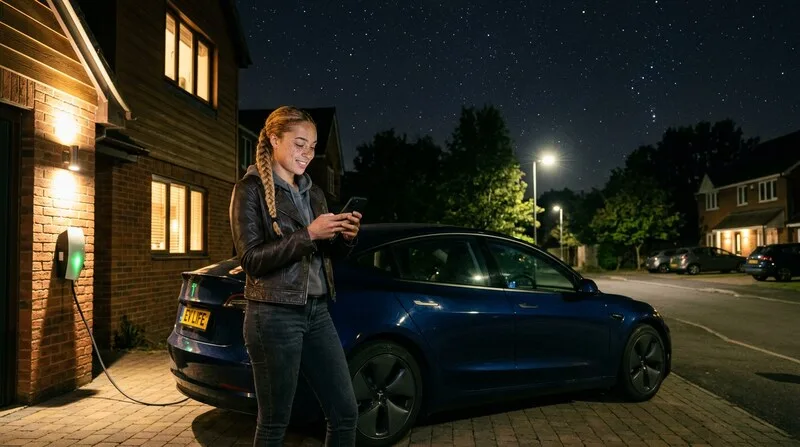
What Is Range Anxiety?
Range anxiety is the fear — or the reality — of running out of battery charge before reaching a charger. It was the single most commonly cited reason for not buying an EV during the early adoption period (roughly 2012–2019), when typical EV ranges were 70–120 miles and charging infrastructure was sparse. Understanding whether it is still a legitimate concern in 2026 requires looking at what has actually changed.
How EV Ranges Have Changed

The numbers tell a clear story:
- 2012: Nissan LEAF — 73 miles EPA range (the best-selling EV of the era)
- 2016: First-generation Chevy Bolt — 238 miles EPA range (a genuine breakthrough)
- 2020: Average new EV EPA range — approximately 205 miles
- 2026: Average new EV EPA range — approximately 280 miles; premium models exceed 350 miles
The Lucid Air Grand Touring achieves over 500 miles EPA range. The Tesla Model S Long Range, Hyundai IONIQ 6 Long Range, and Mercedes EQS all exceed 350 miles. Even budget EVs like the Chevrolet Equinox EV and Volkswagen ID.4 now offer 250+ miles. Range is no longer the fundamental constraint it once was.
Real-World Range vs EPA Ratings
EPA range figures are tested under controlled conditions. Real-world range is lower — how much lower depends on several factors:
- Cold weather: Battery performance drops in cold temperatures. At 20°F (-7°C), real-world range can be 20–40% below EPA figures. This is the most significant real-world range reducer.
- Highway speed: Driving at 75–80 mph consumes significantly more energy per mile than EPA test speeds. Expect 15–25% less range at sustained highway speeds.
- HVAC use: Running the heater (which uses resistive heating on many EVs) is costly. Heat pump-equipped vehicles (increasingly standard on 2023+ models) handle cold much better.
- City driving: Regenerative braking recovers energy, making EVs more efficient in stop-and-go traffic than on the highway — the opposite of gasoline vehicles.
A practical rule: budget for 75–85% of the EPA range in typical mixed driving, and 60–70% in cold highway conditions. A 300-mile EPA vehicle should be planned around a 210–250 mile real-world range in moderate conditions.
The 90% Daily Drive Rule
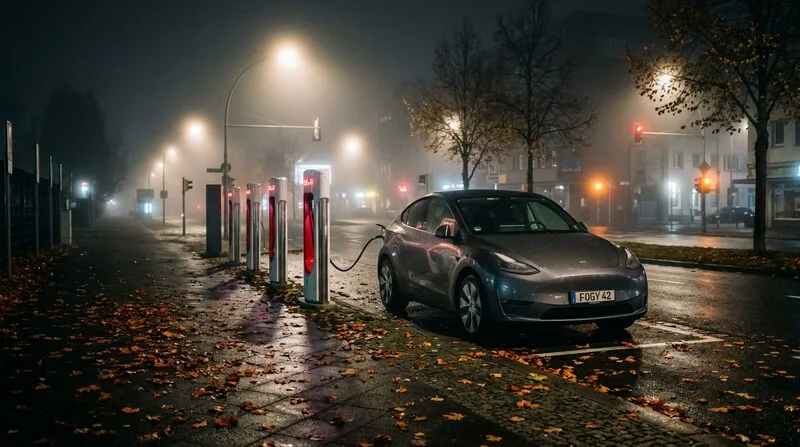
Data from the US Department of Transportation consistently shows that the vast majority of personal vehicle trips are short. Over 90% of daily US driving trips are under 40 miles. The average daily US commute is approximately 16 miles each way. For the overwhelming majority of EV owners, a morning start with 250+ miles of range means public charging is never required for daily use — home charging covers everything.
Range anxiety, for most EV owners in practice, is largely a non-issue for day-to-day life. It is primarily a road trip concern.
When Range Anxiety Is Still Real
There are legitimate scenarios where range anxiety remains valid:
- Rural routes: Charging infrastructure in rural areas, particularly in the Midwest and Mountain West, remains thinner than in urban corridors. A 300-mile EV does not help if the nearest fast charger is 150 miles away in a remote area.
- Extreme cold: Driving in -10°F weather with a reduced-range older EV and no pre-conditioning capability is genuinely stressful.
- Older vehicles with smaller batteries: A 2019 Nissan LEAF with 40 kWh still has real range limitations on long trips.
- Unreliable chargers: Arriving at a planned charging stop to find a broken or occupied station is a real problem. Improving charger reliability is the industry's most important current challenge.
Practical Strategies to Eliminate Range Anxiety
- Develop the overnight charging habit: Treat your EV like a phone — plug it in every night. You start every day full. This eliminates range anxiety for 90%+ of your driving.
- Learn your car's actual real-world range: Do not rely on the EPA figure. Drive your car for a few weeks and see what range you actually get in your typical conditions. Plan from that number.
- Use route planning apps: Apps like A Better Route Planner (ABRP), PlugShare, and your car's built-in navigation plan charging stops automatically for road trips. You do not need to figure it out manually — the app does it for you.
- Keep 15–20% as a buffer: Plan to arrive at charging stops with 10–20% remaining, not 0%. This buffer handles unexpected traffic, detours, or charger availability issues.
- Pre-condition the battery: In cold weather, use your app to pre-heat the battery and cabin while still plugged in at home. This maximizes range from the start.
- Know where chargers are on your common routes: After a few weeks of EV ownership, you will naturally learn where chargers are on the routes you drive regularly.
The Verdict in 2026
Range anxiety as a genuine daily obstacle has been largely solved for buyers of modern EVs with 250+ mile ranges and access to home charging. It persists as a concern for rural drivers, extreme cold climate users, and buyers of older or shorter-range vehicles. For the average US driver, the practical data — 90% of trips under 40 miles, home charging solves daily needs, planning apps handle road trips — makes range anxiety a manageable concern rather than a dealbreaker.
The remaining real issue is charger reliability. A network where chargers work as advertised is more important to the EV ownership experience than adding another 50 miles of EPA range.