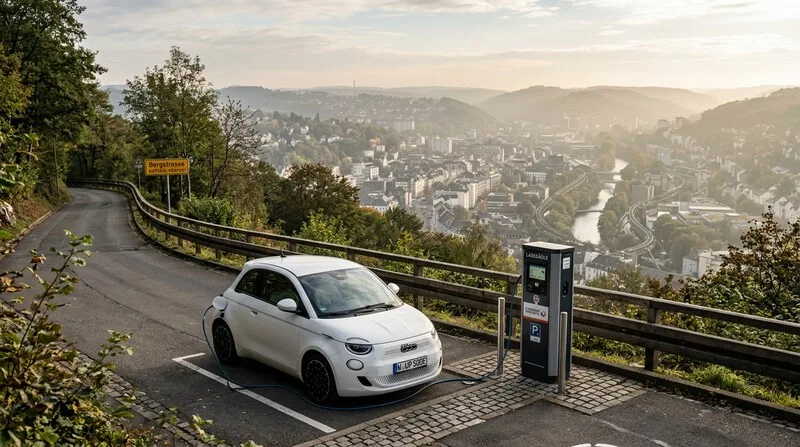
The 80/20 Rule for Road Trips
The single most important tip: charge to 80%, not 100%. Charging from 20% to 80% is fast (20–30 min at 150+ kW). The final 20% to 100% takes as long again. On a road trip, leave at 80% and plan your next stop before you drop below 15–20%.
How Far Apart Should Charging Stops Be?
Plan stops roughly every 150–200 miles at DC fast chargers. This leaves comfortable buffer for detours, traffic, and temperature effects on range. Most major US highways (I-5, I-95, I-40, I-10) now have DC fast chargers every 50–80 miles along the route.
Best Apps for Route Planning
- PlugShare: Best real-world reviews of charging stations. Filter by connector, check-ins, photos.
- ABRP (A Better Route Planner): Optimizes stops specifically for your car model, accounts for speed and elevation. Works with CarPlay/Android Auto.
- Tesla Navigation: For Tesla owners, built-in route planning with Supercharger stops auto-inserted.
- ChargeMap24: 120,000+ stations worldwide, filter by speed/connector, works offline as PWA.
Cross-Country USA: Key Charging Corridors
| Route | Distance | Coverage |
|---|---|---|
| LA → San Francisco (I-5) | 380 mi | Excellent – Tesla, EA, EVgo every 40–60 mi |
| NY → Boston (I-95) | 215 mi | Excellent – dense network, 1–2 stops needed |
| Chicago → Denver (I-80) | 1,000 mi | Good – some rural gaps, Tesla Supercharger essential |
| Miami → Atlanta (I-95/I-75) | 660 mi | Good – EA every 60–80 mi, Tesla dense |
Europe Road Trip Tips
Europe's highway charging is excellent on the Ionity corridor (major motorways across 24 countries, 350 kW). For the best rates, get a charging membership before you go:
- Ionity Passport: €0.35/kWh vs €0.79/kWh walk-up
- ADAC e-Charge: Works at Ionity, EnBW, Allego – great for Germany/Austria/Switzerland
- Plugsurfing / Chargemap Card: Single card for 400,000+ stations across Europe
Top Tips to Avoid Charging Anxiety
- Always have the next charging stop planned before you leave each station
- Have backup networks: if ChargePoint is full, EVgo might be free nearby
- Pre-condition battery in winter – use the navigation for automatic heating
- Drive 65–70 mph instead of 80 mph – increases range by 15–20%
- Check PlugShare reviews for reliability before relying on a remote charger

How Long Does a Road Trip Charging Stop Take?
At a 150+ kW fast charger, a typical 20–80% charging session takes:
| Car | Battery | Peak DC | 20–80% Time |
|---|---|---|---|
| Tesla Model Y LR | 75 kWh | 250 kW | ~22 min |
| Hyundai Ioniq 6 LR | 77 kWh | 233 kW | ~18 min |
| Ford F-150 Lightning ER | 131 kWh | 150 kW | ~41 min |
| Chevy Equinox EV | 85 kWh | 150 kW | ~28 min |
Practical tip: a 25-minute DC fast charging stop is perfect for a coffee or restroom break. Plan these into your trip naturally and road tripping in an EV becomes stress-free.
Europe Pan-Continental Route Example: London to Barcelona
Distance: ~1,100 miles (1,750 km). With a Tesla Model Y or Ioniq 6 and a target of 80% charge stops:
- London → Paris (280 mi): 1 Supercharger stop near Calais/Reims – ~20 min
- Paris → Lyon (290 mi): 1 Ionity stop on A6 motorway – ~25 min
- Lyon → Barcelona (380 mi): 2 stops (Nîmes, Montpellier or Girona) – ~25 min each
- Total extra time vs gasoline car: ~40–50 minutes over a 2-day journey
Membership cards that work across this route: Ionity Passport, Plugsurfing card, Chargemap Card. Get one before your trip to avoid paying walk-up rates (€0.79/kWh vs €0.35/kWh).
What If You Run Out of Charge?
Running completely out of charge is rare with proper planning, but it does happen. Options:
- Roadside assistance: AAA, RAC (UK), ADAC (Germany) all offer EV-specific towing and mobile charging trucks
- On-demand charging services: SparkCharge and similar companies dispatch a portable battery unit to your location (available in major US cities)
- Tow to nearest charger: Unlike a gas car, EVs can be flat-towed short distances without engine damage (check your manual – some require a flatbed)
Frequently Asked Questions
How do I plan EV charging stops on a road trip?
Use ABRP (A Better Route Planner) and enter your car model. It calculates optimal charging stops based on your route, speed and current battery level. For Tesla owners, the built-in navigation handles this automatically. For all other EVs, ABRP is the gold standard.
Is the US charging network good enough for long trips?
Yes, on major interstate corridors. The Tesla Supercharger network has the best coverage and reliability. Electrify America covers all major US highways. Rural and remote routes still have gaps – always plan in advance and have a backup charger identified. The network is expanding rapidly under NEVI funding ($7.5 billion for 500,000 new chargers).
How does cold weather affect EV road trips?
Cold weather reduces range 20–40% and slows DC fast charging unless the battery is pre-conditioned. Plan shorter legs (130–150 miles instead of 180–200) and add extra charging time. Pre-condition the battery by setting a navigation destination before leaving your last stop.
Use the ChargeMap24 map to plan your route stops. Browse charging by US state or by country in Europe. See our charging costs guide to budget your trip accurately.