
Charging cable types at a glance
The most important distinction first: cables match the connector type on both ends. There's the vehicle-side connector (on the car), the charger-side connector (on the charging point), and the cable in between. For 99% of everyday situations, two cable types matter:
- Mode 3 cable (Type 2 ↔ Type 2): for AC charging at home chargers, public charging stations, and industrial outlets
- Mode 2 cable (Type 2 ↔ standard outlet): an emergency cable for a regular household outlet (slow, backup use only)
You never own a CCS cable yourself: the DC fast-charging cable is permanently attached to the charging station and isn't something you carry in the car. More on connector types: EV connectors in Europe explained.
Mode 2 vs. Mode 3: the key difference
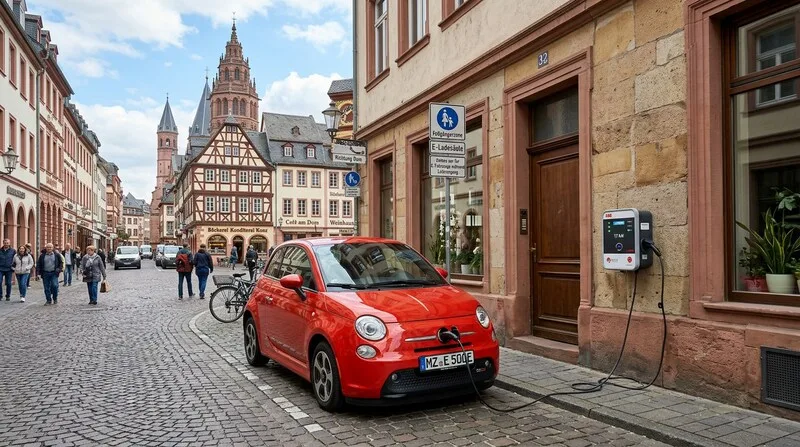
| Feature | Mode 2 (emergency cable) | Mode 3 (standard cable) |
|---|---|---|
| Charger-side connector | Standard household outlet | Type 2 (charger/charging station) |
| Charging power | 2.3 kW (1 phase, 10A) | 3.7–22 kW (1–3 phases) |
| Charge time, 60 kWh | ~26 hours | 3–7 hours (depending on kW) |
| Safety | Needs an in-cable control box (ICCB) | Safety built into the charger itself |
| Recommendation | Emergency use only, not for daily charging | Standard for home and public charging |
Important: a Mode 2 cable should never carry more than 8A continuously – many cheap cables exceed that and can overheat. Quality cables from established brands like Phoenix Contact, Juice Technology or Scame are safer. More on charging times: Charging time calculator.
Buying a Type 2 cable: length, power, and quality
The Mode 3 (Type 2-to-Type 2) cable is the one you'll actually use daily. Recommendations:
Length
- 16 ft (5m): ideal for home use with a fixed home charger and short distances
- 23 ft (7m): recommended for on-the-go use and public charging – more flexible with different parking positions
- 33 ft (10m): for special cases (a long distance to the port) – heavier and bulkier
Power rating
- 32A/22 kW: maximum power for a three-phase home charger. Worth it if your car actually supports 11 or 22 kW (e.g. Renault Zoe)
- 32A/7.4 kW: single-phase – enough for most cars, which only charge single-phase anyway (e.g. VW ID.4, Tesla Model 3 SR)
- 16A: outdated, rarely worth buying today
Quality
Look for the CE mark and proper safety certification. Cheap no-name cables from unverified sources can carry real safety risks. Reputable brands: Keba, Mennekes, Juice Technology, and automaker-branded cables.
Does a cable come with the car?
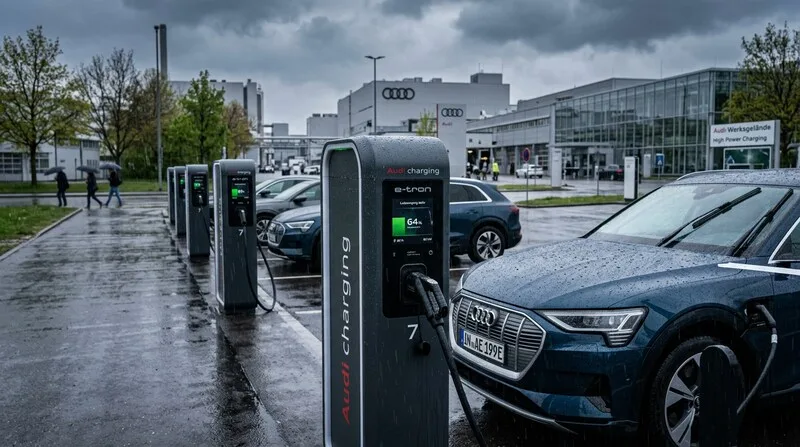
Not every manufacturer includes a Mode 3 cable. Overview:
| Manufacturer | Included cable | Recommended addition |
|---|---|---|
| Tesla | Mode 2 cable plus Type 2 adapter | A 23 ft Type 2 cable for public charging |
| VW ID lineup | 16 ft Mode 3 cable included | A Mode 2 cable as backup |
| BMW/Mercedes | Both Mode 2 and Mode 3 included | A longer Mode 3 cable |
| Hyundai/Kia | Varies by trim level | A 23 ft Type 2 cable recommended |
| Renault | Mode 2 included, Mode 3 optional | A 22 kW cable (the Zoe supports 22 kW) |
Cables for public chargers: what do you need?
At public AC chargers, the cable is often not permanently attached (a "socket-only" station). You bring your own Type 2 cable. Exception: many newer charging points have a permanently attached coiled cable.
Practical tip: a 23 ft cable in your trunk covers 95% of situations. At a DC fast charger (CCS): the cable is always permanently attached – you don't need to bring anything.
Find every charging station and connector type: Interactive charging map.
Prices and buying recommendations
What a good charging cable costs:
- Mode 2 cable (backup): €60–120 – a flexible adapter cable around €350 works as an all-purpose solution
- Type 2 cable, 16ft/22kW: €40–80
- Type 2 cable, 23ft/22kW: €60–120 – the best value for daily use
- Type 2 cable, 33ft/22kW: €90–180
Buying tip: coiled cable designs take up less trunk space but cost more. For a home charger installation, you don't need your own cable at all – it comes permanently attached.
Frequently asked questions
Can I use any Type 2 cable at any charging station?
Yes – Type 2 is the European standard for AC charging. Any Type 2 cable fits any Type 2 port, whether it's a home charger, a public station, or the AC port on a fast charger.
Why should I only use the standard-outlet cable for emergencies?
Household outlets aren't built for sustained heavy load. After 8+ hours at 10A, the outlet can heat up and, in the worst case, cause a fire. Anyone charging daily should install a dedicated home charger. The standard-outlet cable is meant for occasional emergencies only.
Do I need a cable if I only use DC fast chargers?
No. DC fast chargers (CCS, CHAdeMO) have a permanently attached cable. You just plug your car in. For AC charging at home chargers or public AC stations, you need your own Type 2 cable.
What cable do I need for a Tesla Model 3?
Tesla includes a Mode 2 cable with a Type 2 adapter. For public charging, a Type 2-to-Type 2 cable (23 ft, 32A) is a good addition. At a Supercharger, you don't need a cable at all – it's permanently attached.
Next up: AC vs DC charging · Home EV charger installation guide · EV charging guide · Find every charging station