Two fundamentally different ways to charge
EV charging splits into two categories: AC charging (alternating current) and DC fast charging (direct current). The key difference: with AC, the car's onboard charger converts the power; with DC, the current goes straight into the battery, bypassing that step entirely.
AC charging – home and everyday use
Power: 3.7 kW (wall outlet) up to 22 kW (three-phase home charger or public AC station)
Advantages:
- Cheaper electricity – especially on an off-peak home rate
- Gentler on the battery – slow charging generates far less heat
- Available almost anywhere, even a household outlet in a pinch
- Convenient – plug in overnight, wake up to a full battery
Drawbacks:
- Slow: a 60 kWh battery on an 11 kW home charger takes about 6 hours
- Not practical for a spur-of-the-moment road trip
DC fast charging – for highways and time pressure
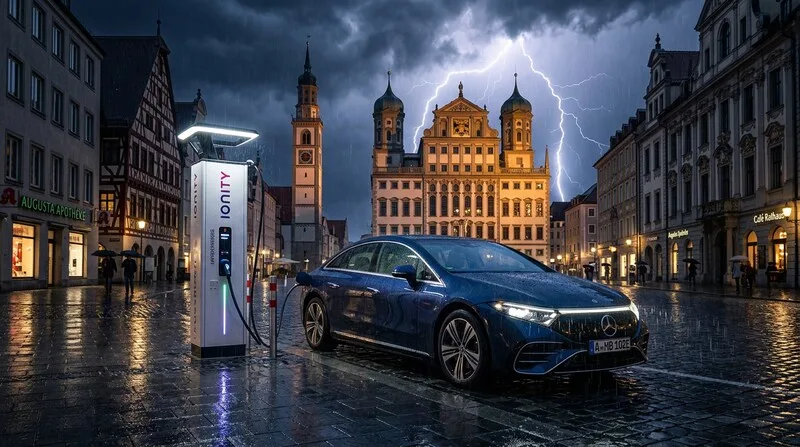
Power: 50 kW up to 350 kW (Ionity, Tesla V4)
Advantages:
- Fast: 10–80% in 20–45 minutes is realistic
- Ideal for road trips and long-distance driving
- Growing fast, including within cities now
Drawbacks:
- More expensive: €0.49–0.79/kWh versus €0.30–0.45/kWh at home
- Charging speed tapers off sharply past 80%
- Frequent fast charging can add up to slightly faster long-term battery wear
What actually harms the battery?
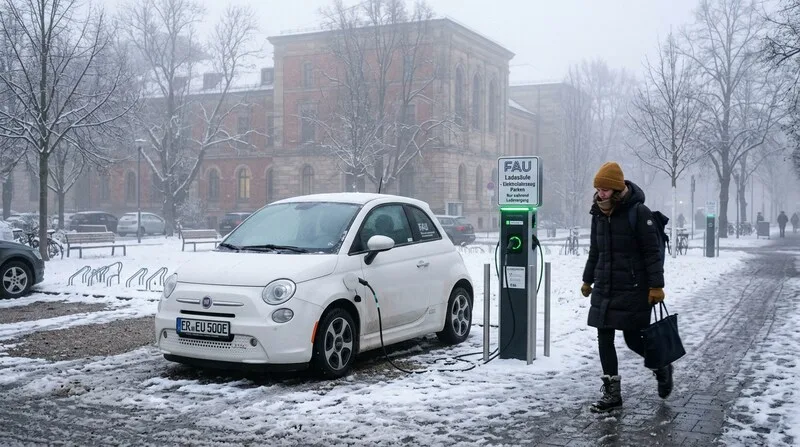
Fear of battery wear from fast charging is understandable, but often overstated. Modern EVs run a sophisticated battery management system (BMS) that monitors and regulates every charging session. Still, a few things are worth knowing:
| Factor | Effect on battery | Recommendation |
|---|---|---|
| Daily DC fast charging | Slightly faster degradation | Prefer home charging when possible |
| Charging to 100% | Accelerates cell aging | Cap daily charging at 80–90% |
| Running below 10% | Deep discharge is harmful | Never let it drop below 10% |
| Heat during fast charging | Main driver of degradation | Precondition the battery first |
Cost comparison: home vs fast charger
Example: 60 kWh battery, 0–80% (48 kWh)
- Home (€0.35/kWh): €16.80
- Public AC (€0.45/kWh): €21.60
- DC fast charger with a plan (€0.52/kWh): €24.96
- DC ad-hoc, no plan (€0.79/kWh): €37.92
Over a year (roughly 9,300 miles at typical consumption), charging at home instead of relying on ad-hoc fast charging can save up to €700 a year.
Preconditioning: fast charging without battery stress
The battery's biggest enemy during fast charging isn't the charging speed itself – it's temperature. A cold battery (below 15°C/59°F) accepts fast-charging power poorly and ages faster while doing it. The fix: preconditioning.
Many EVs (Tesla, BMW iX, Hyundai IONIQ 5 and others) automatically warm the battery once you set a fast charger as your navigation destination. It uses a bit of energy, but it protects the cells significantly and can speed up the session by up to 30%.
- Tesla: set a Supercharger as your destination – preconditioning kicks in automatically
- BMW/Mercedes: add the charging station as a waypoint in the nav system
- No nav trick available? Set the climate control to a warm setting – it warms the battery too
Recommendation: which method, when?
- Daily driving: home or workplace AC charging – cheap and battery-friendly
- Short trip under 125 miles: a full charge at home is enough
- Road trip over 200 miles: DC fast charging to 80% at highway stops
- No home charging available? use a nearby public AC charger as your base, DC only when pressed for time
Frequently asked questions
Does daily fast charging really damage the battery?
Studies show a slightly higher degradation rate with exclusive DC fast charging. In practice, the differences after 5 years are typically under 5% – manageable if it's well managed. If you mostly charge at home and only fast-charge on trips, there's little to worry about.
What is a charging curve?
The charging curve shows how charging speed changes over the course of a session. Most batteries accept full power up to about 80%, after which the BMS throttles the rate to protect the cells – which is why the last 20% takes disproportionately long.
How much more does fast charging cost compared to home charging?
Home charging runs about €0.30–0.40/kWh. Public DC fast chargers often charge €0.49–0.79/kWh. A network membership (EnBW, Ionity Passport) brings that down below ad-hoc pricing. Charging mostly at home versus relying on fast chargers can save up to €700 a year.
Up to what charge level should I charge?
Most manufacturers recommend 20–80% for daily driving to maximize battery lifespan. Charging to 100% occasionally for a long trip is fine as long as it's not a daily habit. Letting the battery drop below 10% is the one thing worth avoiding consistently.
Find every fast charger (50+ kW) on the charging map with a fast-charger filter. Ultra-fast chargers (150+ kW) are filterable too. Calculate exact charging times with the charging time calculator.