
What is Germany's GHG quota credit?
The Greenhouse Gas Reduction Quota (THG-Quote) is a German legal mechanism that requires fossil fuel companies to cut their CO2 emissions. Fuel retailers can meet that obligation by buying certificates, for example from operators of public chargers or private home chargers. EV owners can register their vehicle (or home charger) and sell that quota once a year.
In short: you drive electric, and a fuel company pays you for it, because your driving reduces their CO2 footprint on paper. It's a German-specific mechanism, roughly comparable in spirit to California's LCFS credit program in the US, though the two aren't directly interchangeable.
Who qualifies?
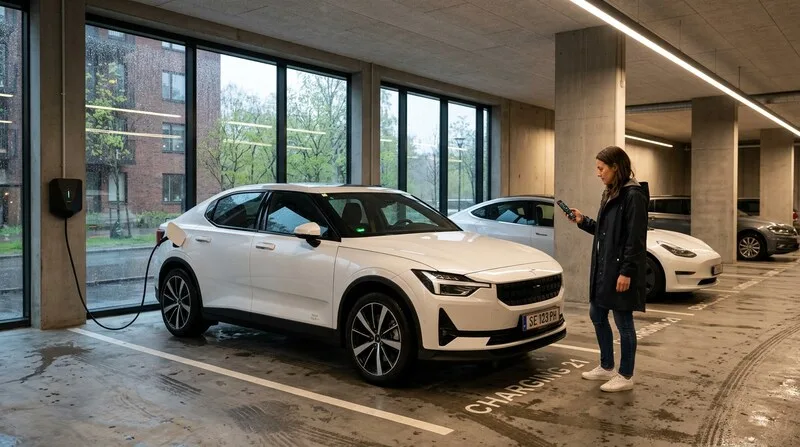
- Anyone registered as the owner of a fully electric vehicle (BEV) in Germany – not PHEVs
- The vehicle must be registered in Germany
- Can be claimed once per year (the accounting year matches the calendar year)
- Company vehicles qualify too – the registered owner submits the application
- No home charger required – public charging counts too
How much is it worth in 2026?
The payout depends on the market price, which has softened somewhat in recent years. Still worth claiming:
| Provider | 2026 payout | Notable |
|---|---|---|
| ADAC | ~€60–75 | Well-known brand, simple process |
| Volkswagen Financial Services | ~€65–80 | VW Group vehicles only |
| Extraenergie | ~€55–70 | Fast payout, all brands |
| DKV Mobility | ~€60–80 | Strong for fleets and businesses |
| Liqipark | ~€70–110 | Highest payouts, waitlists possible |
| EnBW mobility+ | ~€60–75 | Links directly to your charging account |
Prices fluctuate with market conditions. Always check the current rate directly with the provider.
How to claim it
- Pick a provider – use the comparison above as a starting point
- Register – usually just an email and a photo of your vehicle registration
- Submit the application – takes about 5 minutes
- Get paid – after review (2–8 weeks), via bank transfer
Important: apply once per vehicle per year. Ideally submit early in the year, since you tend to benefit from the higher annual pricing that way.
Is it actually worth the effort?
Yes, clearly. It takes about 5 minutes, and the payout arrives annually with no further effort on your part. At €60–100 a year, this is one of the simplest ways to reduce the effective cost of EV ownership.
For comparison: True cost of owning an EV 2026 – see exactly how this credit fits into your overall cost picture.
Frequently asked questions
Can I claim this credit for a leased vehicle?
Only if you're the registered owner on the vehicle documents. In some lease contracts, the leasing company is the registered owner, in which case the credit legally belongs to them unless the contract says otherwise. When in doubt, ask your leasing company.
When's the best time to apply?
As early in the year as possible, ideally January or February. Rates tend to be higher early in the year as providers fill their annual quotas.
Does this apply to plug-in hybrids?
No. Only fully electric vehicles (BEVs) qualify. Plug-in hybrids (PHEVs) are excluded.
Do I have to pay tax on this payment?
For private individuals, it's generally tax-free in Germany, treated as proceeds from selling a private asset. For businesses, it's taxable. When in doubt, consult a tax advisor.
Keep reading: True cost of owning an EV 2026 · Germany's EV incentives 2026 · Germany's home charger incentives · Find every charging station