Why self-driving cars will decide the shape of tomorrow's cities
When people talk about self-driving cars, the conversation usually gravitates toward hardware and software: sensors, how AI learns to drive, and when true Level 5 autonomy will actually become everyday reality. A second, far more consequential question gets much less attention: what actually happens to our cities once autonomous vehicles are operating at scale? That question matters to more than traffic engineers. It matters to anyone who lives in a city, commutes daily, or already drives an EV.
The popular narrative goes something like this: self-driving cars will drive more efficiently, crash less often, and, because they can be shared, actually reduce the total number of vehicles clogging city streets. It sounds logical, but it isn't guaranteed. Transportation researchers have documented for decades a phenomenon known as "induced demand": when a mode of travel becomes cheaper, more convenient, or more available, people simply use it more, not less. That exact pattern sits at the heart of an analysis from the Canadian-Dutch urbanism channel Not Just Bikes, in a video titled "How Self-Driving Cars will Destroy Cities (and what to do about it)" — and it forms the backbone of this article.
Before breaking down the individual arguments, it's worth watching the source material itself. It pulls together historical evidence, economic incentives, and urban planning mechanics to explain why the question "will autonomous cars make our cities better?" is a lot messier than automakers and robotaxi operators tend to suggest.
Source: Not Just Bikes: How Self-Driving Cars will Destroy Cities (and what to do about it)
The core arguments: why less friction means more traffic, not less
Induced demand: an old pattern repeats itself
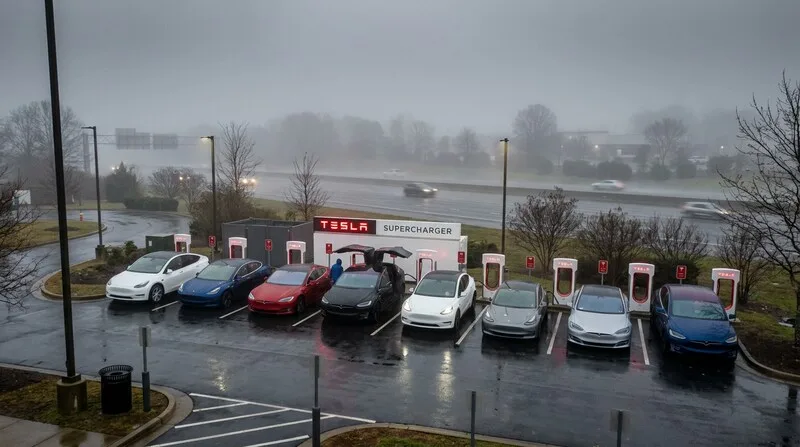
The first and most important point in the video is induced demand. Time and again, history shows the same thing: add a new highway lane, and within a few years it fills right back up with traffic that didn't previously exist. Something similar happened when Uber and Lyft made rides cheaper and more convenient. Rather than replacing car trips, ride-hailing mostly cannibalized walking trips and short transit rides, which pushed total vehicle miles traveled in cities upward. Apply that logic to autonomous robotaxis and the implication is clear: once a ride costs nothing for a driver, requires no parking search, and is available around the clock, the psychological barrier to taking yet another trip drops sharply. That same dynamic could intensify with self-driving fleets rather than fade away.
The robotaxi parking paradox
On paper, one argument for autonomous vehicles sounds especially convincing: since they don't need a driver, they could simply park outside the city and free up valuable curb space downtown. In practice, the video argues, competitive pressure wipes out that advantage almost entirely. Given the choice between a car five minutes away and one fifteen minutes away, riders almost always pick the closer one. Operators respond by keeping their fleets circling or idling near residential neighborhoods and downtown cores instead of parking them on the outskirts. The result is more curb space eaten up by waiting vehicles and more traffic from empty repositioning trips, not less.
- Shorter wait times beat space efficiency: operators optimize for rider satisfaction, not for saving curb space
- Empty repositioning trips to the next rider add extra miles on top of paid trips
- Idling vehicles occupy curbside and loading zones in residential areas
- Subsidized introductory pricing masks the real costs these fleets impose on cities
When corporations help write the rules of the street
Another point the video raises is political. Large technology and mobility companies have a direct financial interest in getting cities to redesign streets in their favor, for instance through dedicated lanes reserved for autonomous vehicles. Framed publicly as a safety and efficiency measure, such a policy could in practice squeeze out public transit and human drivers alike, gradually nudging riders toward paid subscription models. The video warns that street design risks being shaped increasingly by the commercial interests of a handful of operators rather than by the needs of residents. In the US, this tension already plays out around Waymo and Tesla's robotaxi ambitions, where lane access and curb rights are becoming genuine policy battlegrounds in multiple cities.
Sprawl instead of relief
An often-overlooked effect is how autonomous vehicles encourage sprawl. Self-driving cars make long commutes more tolerable because that time behind the wheel can now be spent on other things. That makes living far outside the city center more appealing, even though the infrastructure costs for water, sewer, and power lines in low-density suburban areas are frequently not covered by the taxes collected there. The winners are long-distance commuters, who gain comfort. The losers are city residents, who end up with more traffic, less livable public space, and sprawl that is effectively subsidized by everyone else.
- Short term: cheap, subsidized robotaxi fares attract new riders
- Medium term: more vehicles and empty repositioning trips absorb the newly freed-up road capacity
- Long term: longer commutes become tolerable, accelerating sprawl
- In parallel: cities face growing pressure to redesign streets around operator interests
The fix the video proposes is deliberately technology-agnostic: cities should pursue car-reduced, human-centered planning regardless of whether a given vehicle is autonomous or human-driven. Pedestrians, cyclists, and public transit should take priority, not the sheer number of vehicles on the road, whatever powers or steers them.
What this means for American cities and EV drivers right now
In the US, this is no longer a purely theoretical debate. Waymo already runs commercial robotaxi service across several metro areas, and Tesla has been pushing its own robotaxi ambitions alongside its Full Self-Driving software, which shows how quickly usage patterns can shift once a service becomes available at scale. Anyone wondering whether their own car will become obsolete as autonomous fleets expand should weigh that question from an urban-planning angle, not just a cost angle, because the outcome depends heavily on how cities choose to allocate street space going forward.
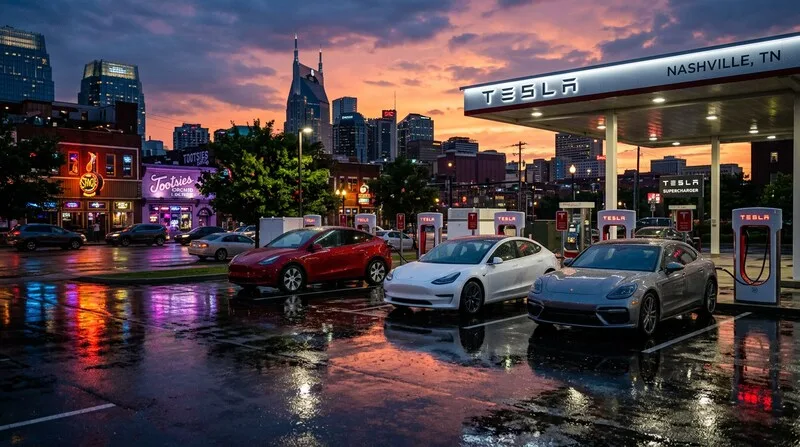
For EV owners, there's an added dimension: large autonomous fleets need reliable charging, ideally without pulling vehicles out of service for long stretches. That turns the question of adequate charging infrastructure for robotaxi fleets into a genuine urban-planning challenge that has to be solved alongside the traffic question. Where a home charger or a good fast-charging guide is enough for a private car today, a fleet of hundreds of vehicles needs far more charging capacity, often in locations where demand simply didn't exist before.
Outlook: future promises versus urban-planning reality
The central insight from the video applies just as well to American cities, even though the regulatory backdrop differs. Cities like Portland, Chicago, and New York have already been reclaiming downtown streets for pedestrians and cyclists in recent years. That progress could either be reinforced or undermined by autonomous traffic, depending on how consistently local governments stick to those goals. If autonomous vehicles simply get folded into existing streets as just another vehicle category, the effects described in the video are likely: more trips, more curb space consumed, more pressure on public space.
If, on the other hand, autonomous vehicles are woven from the start into a broader plan that strengthens public transit and treats vehicles of every kind as a complement rather than the dominant mode, the opposite outcome becomes possible. What matters most is how quickly advances in sensors and sensor fusion turn into concrete, regulated services, and whether cities take an active rather than reactive role in shaping that rollout. The international picture, comparing strategies across China, the US, and Europe, makes clear there is no single blueprint here, only very different political responses to the same underlying technology. In Germany, for instance, national approval rules and a more restrictive legal framework for robotaxis have so far kept large-scale deployment limited to pilot projects, a sharp contrast to the commercial rollouts already under way in several US cities.
For anyone following the EV space, the key takeaway is this: autonomous driving and electric mobility are increasingly two sides of the same coin, since almost every autonomous fleet on the road runs on batteries. Anyone already thinking about a home charger or comparing charging networks is really operating in a space that will merge directly with the debate over autonomous vehicles and livable cities in the years ahead. How that plays out will be decided less by the technology itself and more by urban planning, which is exactly where the video discussed above puts its focus.
Additional Video
While the first video focuses on the driving technology itself, urban design researcher Nico Larco's TEDx talk zooms out to the bigger picture, examining how self-driving cars could reshape land use, parking, urban density, and city planning for decades to come.
Source: TEDx Talks – How Will Autonomous Vehicles Transform Our Cities? | Nico Larco | TEDxCollegePark
Frequently Asked Questions
Will self-driving cars actually reduce traffic in cities?
Not automatically. Historical experience with highway expansion and ride-hailing services like Uber shows that cheaper, more convenient trips tend to generate more total trips, not fewer. Whether autonomous cars ease congestion depends largely on how cities manage street space.
What is the robotaxi parking paradox?
In theory, self-driving cars could park outside the city and save curb space. In practice, operators keep vehicles idling near riders to minimize wait times, which tends to increase congestion and space consumption rather than reduce it.
Do self-driving cars encourage urban sprawl?
Yes, that's one of the key risks. Because autonomous vehicles make long commutes more comfortable, living farther from the city center becomes more attractive, even though the infrastructure costs of that sprawl are often not fully covered by local tax revenue.
How are autonomous driving and electric vehicles connected?
Nearly all autonomous fleets run on electric power, partly due to lower maintenance costs and simpler vehicle control. That makes scaling up charging infrastructure a core requirement for autonomous transportation to work at a city-wide level.