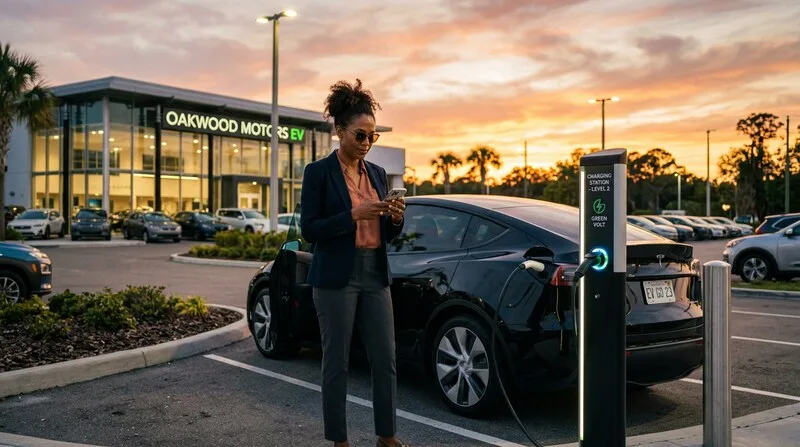
What is ICEing?
ICEing (from Internal Combustion Engine) refers to a non-charging vehicle, usually a gas car, deliberately or carelessly occupying a charging spot. It's a well-known problem everywhere EVs are common, and in Germany it's clearly regulated by law.
EVs can cause the same problem too, when they sit fully charged for hours without moving, known as overstaying. Both cost other drivers time and patience.
Your rights: what's actually allowed?
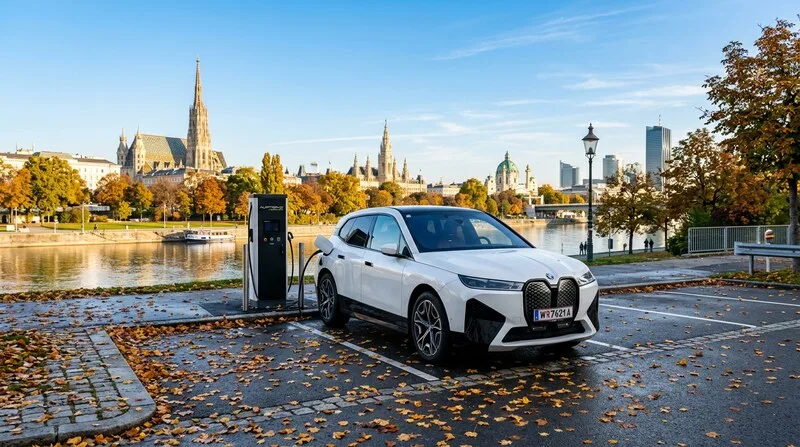
In Germany, charging spots are usually marked with dedicated signage designating them for EV charging only. Anyone parking there without an EV, or without actually charging, is parked illegally.
- Fine: €55 for illegally parking in a marked EV charging spot
- Towing: legally permitted if the spot is explicitly reserved for charging vehicles
- Private property (supermarkets, retail lots): the property owner's rules apply, and they can have the vehicle towed
- No signage: only general parking rules apply, making enforcement harder
Important: touching, moving, or unplugging someone else's vehicle or cable isn't legally permitted. Call local authorities or the property's security/management instead.
Step by step: what to do when blocked
- Don't touch or bump the vehicle – leave someone else's car alone
- Take a photo – document the license plate, signage, and a timestamp
- Contact local enforcement – on public property with clear signage, report it immediately
- Notify the site operator – on private property (a supermarket, mall), report it to security or store management, since they control the property
- Find the next charger – open the charging map and locate a nearby alternative
When an EV sits idle after charging finishes
Many operators charge an idle fee once a session ends, typically 10–15 cents/minute or a flat fee after an hour. That creates a financial incentive to move promptly. Known examples:
- EnBW: an idle fee kicks in 5 minutes after charging ends (AC: €0.05/min, DC: €0.10/min)
- Tesla Supercharger: an idle fee applies once fully charged, waived if under 50% of stalls are occupied
- Ionity: no idle fee, but it can violate the terms of service
If no owner is around and you urgently need the spot: call the operator's support line. Some can send an app notification directly to the driver.
How to avoid the problem in the first place
- Check live status before you go – the charging map shows available stations, and many network apps show real-time occupancy
- Have a backup ready – always know two nearby locations before you set off
- Avoid peak hours – supermarket chargers tend to be busiest on weekend afternoons
- Use the network's app – EnBW, Ionity and Aral pulse often show live status
- Prefer fast chargers – highway fast-charging sites have more stalls per location and fewer blockers
Frequently asked questions
Can I have a car towed for blocking a charger?
On public property in Germany: yes, if the spot is clearly signed as a charging spot. Contact local enforcement, who decide on towing. On private property (a retail lot), the operator or security team can arrange it. You can't arrange the tow yourself.
Can I unplug an EV that's finished charging?
Legally, it's a gray area, since you're interacting with someone else's property. In practice, the community often tolerates it as a last resort when a car is obviously at 100% and has shown no activity for hours, but it's not legally risk-free. Better: contact the operator or local authorities.
What if I can't find any free charger?
Open the charging map, set a 3–6 mile radius, and see every alternative at a glance. Filtering for "fast charger" surfaces stations with more capacity and typically lower occupancy.
What's the fine for ICEing in Germany?
The standard fine for illegally parking in a marked charging spot is €55. Towing costs can be added on top, and the illegally parked driver bears them fully.
Keep reading: Charging etiquette: 7 rules · Highway EV charging guide · Find a free charger · EV charging card comparison