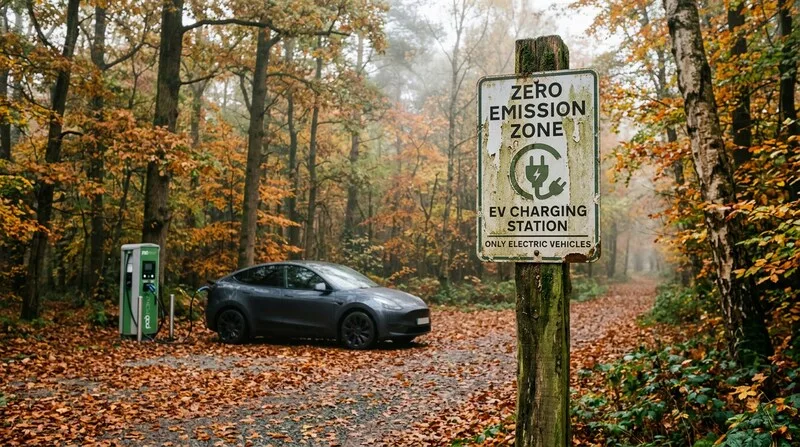
What is bidirectional charging?
In normal charging, power flows one way: from the grid into the battery. Bidirectional charging allows the reverse too – battery power flows back out, either into the home (V2H) or onto the public grid (V2G).
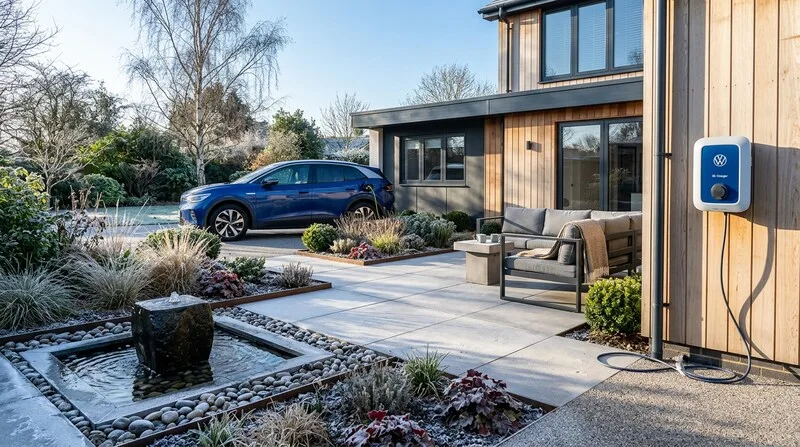
That sounds technical, but in practice it's simple: charge your car during the day with cheap solar power, then draw from it in the evening when grid electricity is expensive. Or use the battery to help stabilize the public grid and get paid for it.
V2G, V2H, V2L – the differences
| Technology | Where the power goes | Typical use |
|---|---|---|
| V2G (Vehicle-to-Grid) | Public power grid | Grid payments, grid stabilization |
| V2H (Vehicle-to-Home) | Your house (appliances) | Lower electricity bills, more solar self-consumption |
| V2L (Vehicle-to-Load) | External devices (outlet on the car) | Camping, power tools, emergencies |
Which EVs actually support V2G/V2H?
In 2026, V2G/V2H is still a niche feature – most EVs on the road aren't bidirectional-capable yet. These vehicles support it:
- Nissan Leaf (2013 onward): a pioneer with CHAdeMO V2G, though the connector is now dated
- Hyundai IONIQ 5 & IONIQ 6: V2L standard, V2G pilot programs underway
- Kia EV6 & EV9: V2L standard (3.6 kW), V2H planned
- Volkswagen ID.7 (from 2026): V2H officially announced
- BYD Atto 3 & Seal: V2L (2.2 kW) as standard
- Tesla (from 2026): V2H announced for Powerwall integration
Important: V2G always requires both a compatible connector on the car (usually CHAdeMO or CCS with the ISO 15118-20 protocol) and a bidirectional charger.
Bidirectional home chargers in 2026
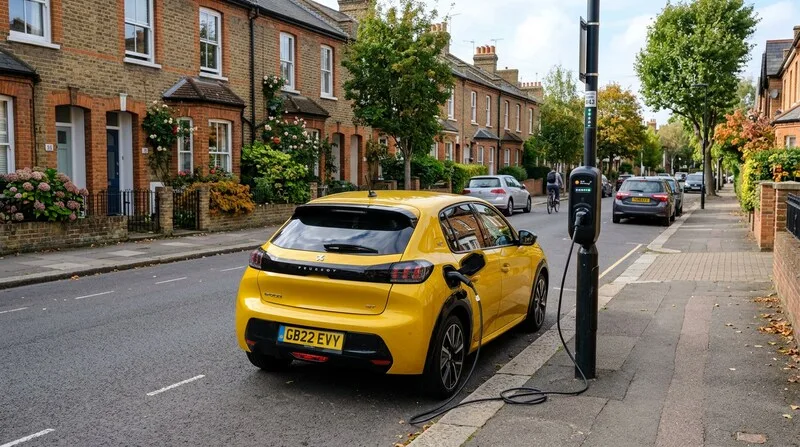
For V2H and V2G, you need a specialized charger capable of routing AC power back into the house or grid. Current models include:
- Wallbox Quasar 2: 11.5 kW bidirectional, CHAdeMO/CCS, from around €3,500
- Sigenergy SigenStor: combines a charger, battery storage and inverter in one unit
- Huawei CHARGER SE: 22 kW bidirectional, built for OCPP 2.0.1
- ABB Terra AC W22: bidirectional AC for select compatible vehicles
At €2,000–5,000, upfront cost is significantly higher than a standard charger (€400–1,500). Installation is more involved too – always confirm your specific vehicle is compatible first. See our home charger comparison for standard options.
Does V2G/V2H actually pay off financially?
The economics depend heavily on your setup:
- With solar panels: real savings are possible. Charge with cheap solar power (a few cents per kWh) during the day, draw it back out in the evening instead of buying grid power at 30+ cents/kWh
- With a dynamic electricity rate: charge during low or negative price periods, discharge during price spikes – potentially €500–800 a year in savings
- Without solar or a dynamic rate: currently not very economical – the expensive hardware and added battery wear outweigh the benefit
Some funding may be available for a bidirectional charger paired with solar. See Germany's EV charger incentives.
Assumptions: a 10 kWp solar system, a Hyundai IONIQ 5 (72 kWh), and a bidirectional charger. On a sunny day, you charge from 10am to 3pm using free solar power. From 6pm, you feed 20 kWh back into the house – roughly €6 in savings that day. Over 150 sunny days a year, that adds up to about €900.
Frequently asked questions
Does V2G damage the battery?
Repeated charge/discharge cycles do accelerate aging somewhat in general. However, studies show that intelligent V2G usage (staying within the 20–80% range) barely increases wear compared to normal charging. Manufacturers like Nissan and Hyundai guarantee their batteries even under V2G use.
Do I need an electrician for installation?
Absolutely. Bidirectional chargers must be installed by a certified electrician. You'll also likely need a bidirectional meter and grid operator approval. Budget €1,000–2,000 for installation costs.
When will V2G become mainstream?
Experts expect broader adoption from around 2026/2027, as more vehicles support the ISO 15118-20 standard and bidirectional chargers get cheaper. Until then, it's mainly interesting for early adopters with a solar installation already in place.
More on home charging: Home EV charger installation guide. All charger models: Best home EV chargers 2026 · Cheap home electricity for EV charging · Pairing solar with a home charger