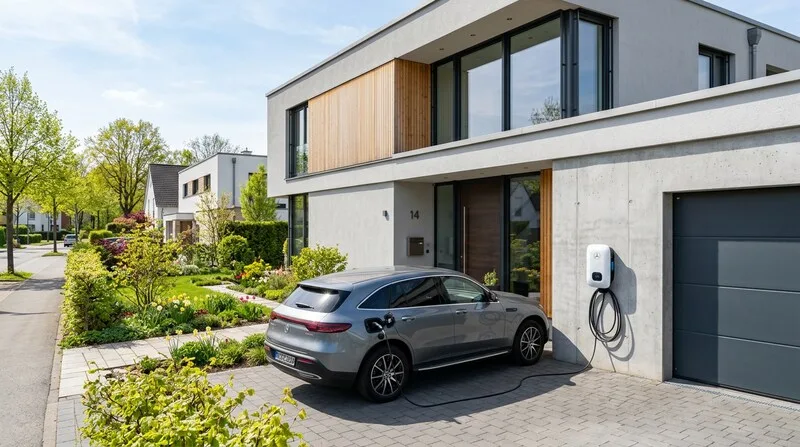
An EV as a commuter car: does it actually fit?
For plenty of commuters, an EV is the best car decision they'll ever make. The reason: regular, predictable routes are the ideal use case for an EV. Anyone driving 20–50 miles a day, who can charge at home or at work, and doesn't plan spontaneous 300-mile trips, gets the most out of it.
An EV as a commuter car pays off especially well when:
- Your daily one-way commute is under 90 miles
- Home charging (a charger or even a wall outlet) is available
- Your employer offers or is planning workplace charging
- Home electricity is cheaper than current gas prices
It gets harder with: very long one-way commutes over 125 miles, parking exclusively in underground garages with no charging option, or frequent long field-work days with unpredictable routes.
How much range do you need as a commuter?
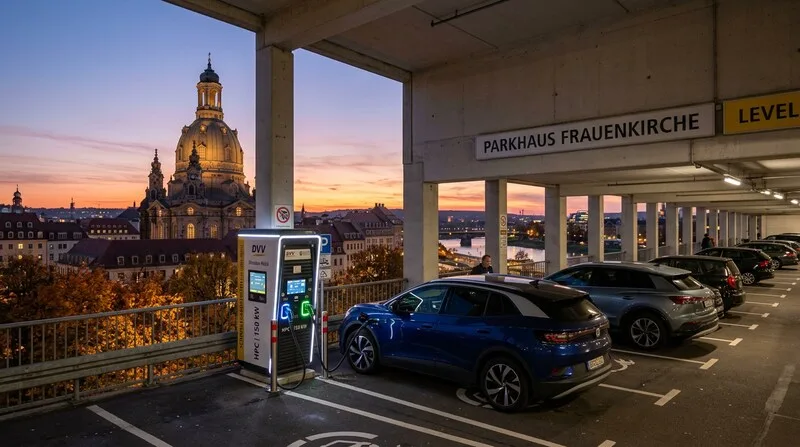
Rule of thumb: an EV should have at least double your daily distance in range – plus a 20% buffer for winter and detours. Examples:
| One-way commute | Daily need | Recommended min. range | Suitable models |
|---|---|---|---|
| Up to 20 mi | 40 mi | 95 mi (any EV) | Fiat 500e, VW e-Up, Mini SE |
| 20–40 mi | 40–75 mi | 155–185 mi | VW ID.3, Renault Megane E-Tech |
| 40–60 mi | 75–125 mi | 220–250 mi | VW ID.4, Skoda Enyaq, Tesla Model 3 |
| 60–90 mi | 125–185 mi | 280–310 mi | Tesla Model Y LR, Hyundai IONIQ 6 |
In winter, range drops 20–35% depending on the model. Always build in a winter buffer. Details: EV range in cold weather. For exact charging times for your model: Charging time calculator.
Charging as a commuter: home, work, or public?
Commuters should prioritize charging in this order:
1. Home (a home charger) – the cheapest option
With an 11 kW home charger, you charge overnight for 7–15 cents/kWh (off-peak rate) and start every morning with a full battery. At 50 kWh of daily use, that saves €3–5 a day versus public charging.
No home of your own? Since 2020, German renters have a legal right to a charger installation. How that works: Charging as a renter – rights explained.
2. Workplace charging – often free
More employers are installing AC chargers in their parking lots. Charging at your employer is tax-free under §3 No. 46 EStG. It's a real perk: 8 hours of charging (3.7 kW) adds roughly 30 kWh – about 95–125 miles of range – for free.
3. Public chargers – backup
Too expensive as your daily main solution. Useful as a supplement on long workdays or when home charging isn't available. For cheap public rates: EV charging card comparison.
What does commuting electrically really cost?

Gas vs. electric comparison for typical commutes (gasoline: €1.75/L, 7 L/100km; electricity: €0.28/kWh, 18 kWh/100km):
| Annual distance | Gasoline cost | Electricity cost (home) | Savings |
|---|---|---|---|
| 9,300 mi | €1,838 | €756 | €1,082 |
| 12,400 mi | €2,450 | €1,008 | €1,442 |
| 18,600 mi | €3,675 | €1,512 | €2,163 |
On top of that, lower maintenance costs (no oil changes, less brake wear): typically €800–1,200 less per year than a gas car. Full cost breakdown: True cost of owning an EV 2026.
The best EVs for commuters in 2026
Criteria: strong value for money, at least 185 miles of real-world range, simple AC charging (11 kW), comfortable daily driving.
- VW ID.3 Pro (from €36,000): 220–260 miles real-world, compact, low maintenance – ideal for city commuters under 50 miles/day
- Hyundai IONIQ 6 Standard Range (from €39,000): 250 miles real-world, very efficient, exceptional aerodynamics
- Tesla Model 3 RWD (from €41,000): 280 miles real-world, Supercharger network, best software – especially for longer commutes
- Skoda Enyaq iV 60 (from €38,000): 220 miles real-world, wagon-like practicality, plenty of space for family commuters
- BYD Atto 3 (from €38,000): 250 miles, lowest total cost of ownership, expanding service network
Full model comparison with tables: Best electric cars 2026.
Incentives and tax perks for EV commuters
Even without a national purchase bonus (Germany's ended in 2024), there are real advantages:
- Company-car benefit: an EV company car is taxed on just 0.25% of the list price monthly (versus 1%). On a €40,000 car: just €100 in taxable benefit instead of €400 – roughly €1,000–1,500 less tax per year.
- Commuting deduction: applies to EV commuters too – roughly €0.30/mile from the first mile, €0.38/mile from mile 13 onward.
- KfW 442 (solar + charger): if you also install solar, you can get funding up to €1,500 per charging point.
- Employer-provided home charger (§3 No. 46 EStG): a charger provided or paid for by your employer is tax-free.
Tax details: EV taxation and the taxable benefit explained · Cheap electricity rates for EV charging.
Frequently asked questions
Is one overnight charge enough for a daily commute?
An 11 kW home charger can add up to 88 kWh in 8 hours – more than most batteries even hold. Even a standard wall outlet (2.3 kW) charges 18 kWh overnight, enough for a 20-mile daily commute. A dedicated home charger is worth it above roughly 30 miles a day.
What if I rent and can't install a charger?
Since 2020, German tenants have a legal right to have a charger installed (§554 BGB). A landlord can't refuse without reason. Alternatives: charge at work or use public chargers. Full details: Charging as a renter.
Can I deduct charging electricity as a commuter?
Deducting household electricity directly isn't possible – but the standard commuting deduction applies to EV commuters too. As a self-employed person, you can deduct a proportional share for business use. With a company car, the employer covers costs tax-free.
Is an EV worth it for a short commute under 20 miles?
Yes – especially well, actually, since even a small-battery EV handles the distance easily. Cheap entry points like the Fiat 500e or a base VW ID.3 are ideal for short commutes and post the lowest total cost of ownership of any vehicle class.
Next steps: Best electric cars 2026 – full model comparison · Home EV charger installation guide · Find every charging station