Liability, partial, or full coverage – what do you actually need?
As with any vehicle: liability coverage is mandatory, comprehensive coverage is optional. For an EV, that decision matters more than for a gas car, because of the expensive battery.
| Coverage type | What's covered | Recommendation for EVs |
|---|---|---|
| Liability | Damage to third parties (mandatory) | Always required |
| Partial coverage | Theft, fire, storm, glass damage, animal collisions | Strongly recommended (battery!) |
| Full coverage | + damage to your own car in an accident, vandalism | Recommended for new vehicles |
The EV-specific concern: battery damage can easily cost €8,000–25,000. Without comprehensive coverage, you bear that cost entirely yourself, unless it falls under the manufacturer's warranty.
What does EV insurance actually cost?
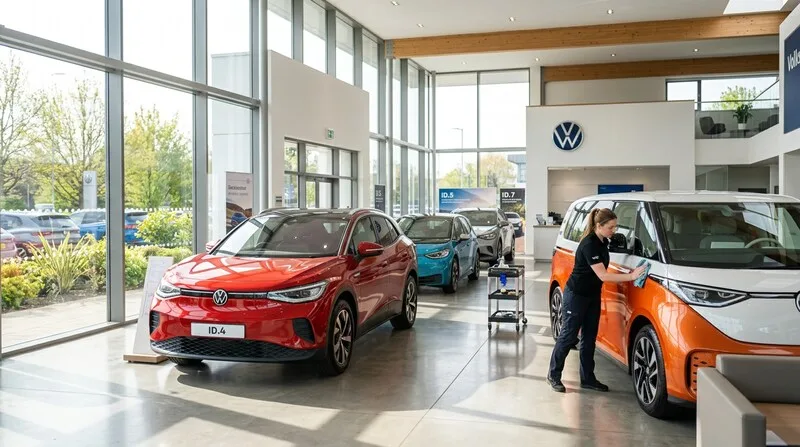
EVs often run 10–20% higher than comparable gas cars for auto insurance, due to higher vehicle value and pricier repairs. At the same time, many EV drivers benefit from favorable risk classes, since EVs statistically cause fewer accidents.
- Liability (e.g. Tesla Model 3, good driving record, urban area): roughly €600–900/year
- Adding partial coverage: roughly €150–300/year
- Full coverage instead of partial: roughly €400–800/year (depending on deductible)
- Example, VW ID.4, good driving record: full coverage from roughly €1,100/year
Tip: a deductible of €300–500 on full coverage can often lower the premium by 20–30%.
Important clauses: battery, cable, and charging equipment
EVs come with insurance clauses that simply don't exist for gas cars. Three matter most:
- Battery protection (partial coverage): damage from a short circuit while charging, fire, or a lightning strike is covered under partial coverage, but only if the damage was caused externally. Normal degradation (capacity loss) is never an insurance matter.
- Charging cable theft: a cable stolen from your vehicle or from a public charging station is covered under partial coverage, but check your policy for this specific clause since not every plan includes it.
- Damage to a charging station: if you accidentally hit a charger, liability coverage applies. Damage to your own vehicle is only covered under full coverage.
Provider comparison 2026: who insures EVs affordably?
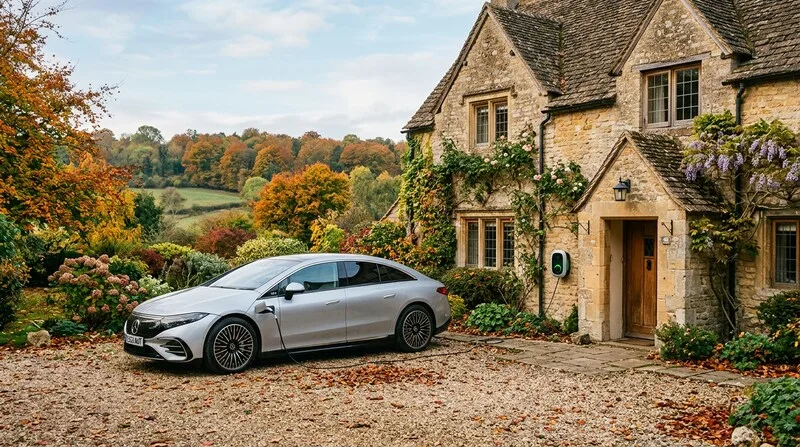
More insurers now offer dedicated EV plans. The major providers at a glance:
| Provider | EV-specific features | Strength |
|---|---|---|
| HUK-COBURG | Cable coverage included, favorable risk classes | Value for money |
| ADAC Auto Insurance | Roadside assistance for charging failures | Service and roadside coverage |
| Allianz | EV discount, usage-based plan available | Wide network, strong advisory service |
| HDI | Battery damage explicitly included, gap coverage | Full protection for new vehicles |
| AXA | Smart-charging clause, home charger co-insured | Home charging protection |
Recommendation: compare at least 3 providers. Pay close attention to the specific clauses covering the battery, the charging cable, and charging sessions, these vary a lot between plans.
Usage-based plans: savings through driving-behavior data
Many insurers now offer usage-based plans, where an app tracks driving behavior. EV drivers often have a natural edge here: regenerative driving, lower top speeds, and anticipatory braking tend to score well with these algorithms. Potential savings: 10–25% on the annual premium.
Gap coverage when leasing
Anyone leasing an EV shouldn't skip gap coverage: it covers the difference between the insurance payout on a totaled vehicle and the remaining lease balance, important because EVs are often valued well below the lease's residual value after a total loss.
Bottom line: what matters most for EV insurance?
- At minimum, get partial coverage, for battery protection against short circuits, fire, and theft
- Explicitly check for a charging cable clause
- Full coverage recommended for new or leased vehicles
- Gap coverage for financed or leased vehicles
- A usage-based plan can save 10–25%
For charging costs on the road, find every public charging point on our charging map, including pricing info for the major networks like EnBW, Tesla and Ionity.