Why used EVs are such a good deal in 2026
EVs typically lose 15–25% of their value in the first year. Buy a 2–3 year old vehicle, and you benefit from that steep drop. A VW ID.3 Pro (new: €36,995) often sells for €22,000–25,000 after 2 years and 19,000 miles. The battery typically still holds 90–95% of its original capacity.
The used EV market is growing fast: more vehicles return from lease every year, pushing prices down and expanding selection.
The battery: the single most important thing to check
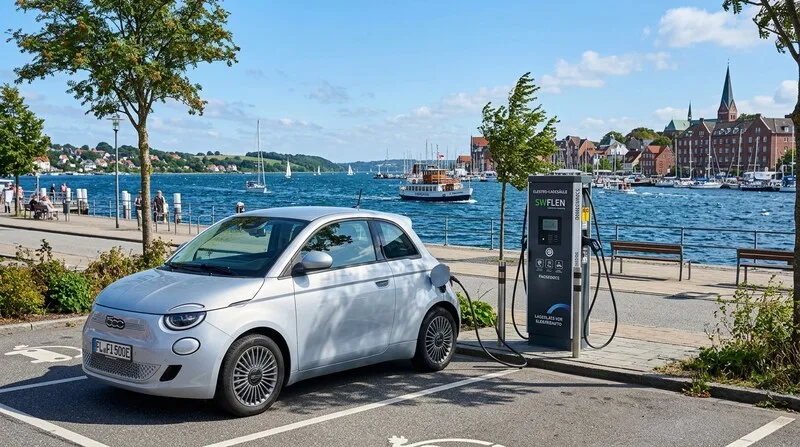
The battery is the most expensive individual component in an EV – and the biggest uncertainty when buying used. Here's what you need to know:
State of Health (SoH): SoH shows how much capacity the battery retains compared to new. A SoH of 85% means the car still has 85% of its original range. Above 85% is considered good; below 75% is a red flag.
How do you check SoH?
- Many EVs (Tesla, BMW, Hyundai) display SoH directly in the vehicle menu or app
- An OBD-II adapter plus an app (CarScanner, BimmerCode and similar) can read SoH on most models
- Dealers can pull exact SoH with diagnostic equipment – always request this before buying
- A full charge to 100% combined with the displayed usable kWh shows the real battery size
| SoH | What it means | Buying decision |
|---|---|---|
| 95–100% | Excellent, barely any degradation | Strongly recommended |
| 85–94% | Normal for a 3–5 year old car | Fine at the right price |
| 75–84% | Noticeable range reduction | Only at a steep discount |
| Under 75% | Significantly degraded | Special cases only |
Battery warranty: what applies to a used purchase?
Nearly every manufacturer offers an 8-year or 100,000-mile battery warranty (guaranteeing at least 70% capacity). The warranty is tied to the vehicle, not the original owner – it transfers automatically with a used purchase. That's a massive advantage over a used gas car.
- VW (ID.3, ID.4): 8 years/100,000 miles, min. 70% SoH
- Tesla: 8 years/100,000–150,000 miles (depending on model), min. 70%
- Hyundai/Kia: 8 years/100,000 miles, min. 70%
- BMW: 8 years/62,000 miles, min. 70%
- Renault: 8 years/100,000 miles, min. 66%
Tip: request the warranty documentation and confirm it's still active. A warranty can be voided by proven gross negligence (like unauthorized battery modification).
Pricing guide: what does a used EV actually cost in 2026?

| Model (year) | Typical price | Battery | Remaining warranty |
|---|---|---|---|
| Renault Zoe (2020) | €12,000–16,000 | 52 kWh | ~3 years left |
| VW ID.3 Pro (2021) | €20,000–24,000 | 58 kWh | ~4 years left |
| Tesla Model 3 SR (2021) | €22,000–27,000 | 60 kWh | ~4 years left |
| Hyundai IONIQ 5 (2022) | €28,000–34,000 | 72/77 kWh | ~5 years left |
| BMW iX3 (2021) | €29,000–34,000 | 80 kWh | ~4 years left |
Connector check: which chargers can the car actually use?
Not every used EV is equally well suited to today's charging infrastructure. Things to check:
- CCS (Combined Charging System): the European fast-charging standard, mandatory for new models since roughly 2018. Older vehicles (Nissan Leaf pre-2018, early Zoe) may have CHAdeMO or no DC fast charging at all.
- Maximum DC charging speed: a 2020 Renault Zoe caps at 50 kW DC – slow for road trips. An IONIQ 5 charges at 220 kW – five times faster.
- AC charging power: 11 kW (three-phase) should be the minimum for a decent home charger setup. Older models may only support single-phase (3.7 kW).
- Older Teslas without CCS: pre-2020 European Teslas use a proprietary connector – fine for Superchargers, but a CCS adapter is needed for other networks.
Every connector type explained: CCS, Type 2 and CHAdeMO compared.
Checklist: what to check before buying
- Get the SoH read out (via app, diagnostic tool, or the vehicle menu). Below 85%, negotiate the price down.
- Check the charging history: Tesla and some others log how often and at what power the car was charged. Heavy DC fast-charging to 100% signals a higher degradation risk.
- Get full warranty documentation: is the battery warranty still active? When does it expire?
- Check the software version: is the latest firmware installed? An outdated software version on a Tesla or VW can hint at neglect.
- Test drive plus a fast-charging stop: visit a public DC charger and confirm the car actually reaches its rated peak power. If it doesn't, that could indicate a fault.
- Check the tires: EVs wear tires faster than gas cars. Tread depth under 1/8 inch means an immediate new investment.
- Unlocked features: on a Tesla, a previous owner may have purchased Full Self-Driving or extended range – these stay with the vehicle.
Frequently asked questions
Is a used EV worth it compared to a new one?
Very often, yes. A 2–3 year old EV is typically 30–40% cheaper than new, but still has 85–95% battery capacity and often several years of warranty left. Especially attractive: lease returns from 2022 onward are now entering the market with well-maintained batteries.
Which used EV is the most reliable?
The Tesla Model 3 and Model Y score well in independent reliability testing. The first-generation Hyundai IONIQ (through 2019) and Kia Soul EV are considered particularly low-maintenance. Older BMW i3s often still have excellent battery condition despite their age.
Should I budget for a battery replacement on a used EV?
Only as a worst-case scenario. A battery replacement costs €5,000–20,000. As long as the manufacturer warranty is still active (typically 8 years/100,000 miles, 70% capacity guarantee), the manufacturer covers it. A used vehicle with SoH above 85% and valid warranty shouldn't need a replacement budgeted at all.
Where's the best place to buy a used EV?
Authorized dealers typically offer inspected vehicles with a statutory warranty. Marketplaces and dedicated platforms offer wide selection. Tesla runs its own certified pre-owned program with verified battery condition. Buying privately is cheaper but comes with no warranty – always verify SoH yourself.
Next step: How to charge an EV · Home EV charger installation guide · EV maintenance costs · Choosing the right charging cable · Find charging stations near you