What Is a Robotaxi? Definition and Context
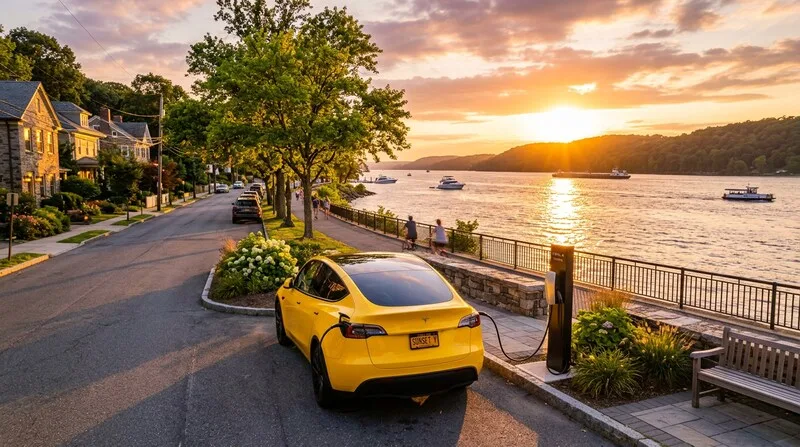
A robotaxi is a vehicle that you hail through an app, just like a traditional taxi, except there is no human driver behind the wheel. Riders open an app, enter a pickup and drop-off point, and a driverless car arrives, picks them up, and takes them to their destination. Technically, these are highly automated or fully autonomous vehicles that rely on sensors, cameras, and artificial intelligence instead of a person to read traffic, pedestrians, and obstacles. For a deeper technical grounding, the guide on SAE levels of autonomous driving is a useful starting point, since most robotaxis currently operate at Level 4, meaning highly automated driving within a defined operating area rather than fully autonomous driving anywhere.
How It Differs From Traditional Taxis and Ride-Hailing
On the surface, using a robotaxi feels almost identical to Uber or Lyft: open the app, share your location, and a car shows up. The real difference is the missing driver, and that has direct consequences for cost, availability, and safety. Without a driver, labor costs disappear, which could make robotaxi rides cheaper over the long run, but the demands on software and sensor hardware increase dramatically. It's also worth separating robotaxis from driver-assistance systems: a robotaxi is not a car with autopilot bolted on, it's a system designed to operate without human intervention as the default case. The distinction between assistance features and genuine autonomy is explained in detail in ADAS vs. Self-Driving Cars.
Why the Topic Is Gaining Momentum Now
Since 2025, robotaxis have moved out of the testing phase and into genuine everyday operation, at least in a handful of US cities. Tesla launched its own robotaxi service in Austin, Texas, while Waymo has already been running commercially in multiple cities for years and reports handling several hundred thousand paid rides per week. That matters for anyone thinking about the future of mobility, because it puts two competing models side by side: owning a personal electric vehicle versus calling up a shared, autonomous ride on demand. The two models aren't mutually exclusive, and they will likely coexist for years, depending on the city, the use case, and the price.
Source: Marques Brownlee (MKBHD): Investigating the Tesla Robotaxi!
MKBHD Puts Them Head-to-Head: Tesla Robotaxi vs. Waymo
Tech reviewer Marques Brownlee (MKBHD) rode in both systems back-to-back in Austin, producing one of the rare direct comparisons between the two best-known robotaxi operators. The test makes clear just how differently the two companies approach the underlying technology, even though the rider experience looks similar at first glance.
Two Technology Philosophies: Cameras vs. Sensor Fusion
The biggest difference lies in the sensor setup. Tesla skips LiDAR entirely and relies solely on eight cameras, with a neural network inside its Full Self-Driving (FSD) software interpreting the video feeds. Waymo takes a sensor-fusion approach instead: its fifth-generation vehicles combine five LiDAR units, six surround radars, and 29 cameras, with all of that data processed together. The guide on how self-driving cars see with LiDAR, radar, and cameras breaks down how each sensor type works and how they're merged into a single picture of the environment. Readers curious specifically about Tesla's camera-only approach can dig deeper in Tesla Full Self-Driving (FSD) Explained, while the Waymo architecture is covered in How Waymo Robotaxis Work.
Safety Drivers, Geofencing, and Legal Status
One key detail from the test: at the time it was filmed, Tesla's robotaxis weren't operating with full legal autonomy yet, and a safety monitor sat in the front passenger seat, ready to intervene if something went wrong. Since early 2026, Tesla has been gradually removing that in-car supervision in Austin, and a growing share of the fleet now runs without a safety monitor on board at all. Both operators also stick to a fixed operating area rather than covering an entire city, a practice known as geofencing. At the time of the test, Tesla's Austin service was limited to specific neighborhoods rather than the whole metro area. This kind of restriction is typical for robotaxi fleets everywhere right now, and it's closely tied to how the underlying AI makes driving decisions: it performs far more reliably in a familiar, well-mapped area than in unfamiliar territory.
Driving Behavior in the Test: Which Feels More Mature?
Head-to-head, Waymo came across as the more confident and polished driver, something Brownlee attributes mainly to its far higher number of test miles logged over the years. Tesla, on the other hand, scored points for its software and app experience, which felt more modern and potentially cheaper to scale, partly because it skips expensive LiDAR hardware. Tesla also drove noticeably more aggressively and dynamically than Waymo during the test. Whether that's a deliberate design choice or simply less mature software remains an open question. Getting in and out worked the same way with both systems: request a ride through the app, share your location, and the car drives itself to the pickup point and then to the destination.
Cities and Providers: Where Robotaxis Are Already Operating
Robotaxis are still clearly in an early rollout phase heading into 2026. Both operators compared in the video are only active in a handful of US cities with limited coverage, and expansion tends to happen neighborhood by neighborhood rather than all at once.
- Austin, Texas: home of Tesla's robotaxi service, initially with a safety monitor on board, increasingly without one since 2026
- San Francisco: a long-running Waymo market with dense operating coverage
- Phoenix, Arizona: one of the very first commercial Waymo markets
- Los Angeles and other US metro areas, with operating zones expanding step by step
Beyond Tesla and Waymo, a number of other companies are building their own robotaxi programs, often with very different technical and geographic priorities, including Chinese operators already running large fleets in cities such as Wuhan and Beijing. Autonomous ride-hailing is no longer a purely American story, even though the pace and maturity vary sharply from region to region.
Outlook: What Robotaxis Mean for Charging Infrastructure and Car Ownership
Regulatory conditions vary widely by country, and that gap is worth understanding. In Germany, for instance, vehicle approval rules and liability law are considerably stricter than in Texas or Arizona, so large-scale commercial robotaxi operation there is still years away. Readers interested in that specific regulatory picture can find more detail in Robotaxi Laws in Germany & Europe. What's already clear, regardless of jurisdiction, is that robotaxis raise a fundamental question about the future of personal mobility: does owning a car still make sense for many people once autonomous fleets become cheap and widely available? That question gets a full treatment in Will Robotaxis Replace Car Ownership?
Charging Infrastructure as an Underestimated Factor
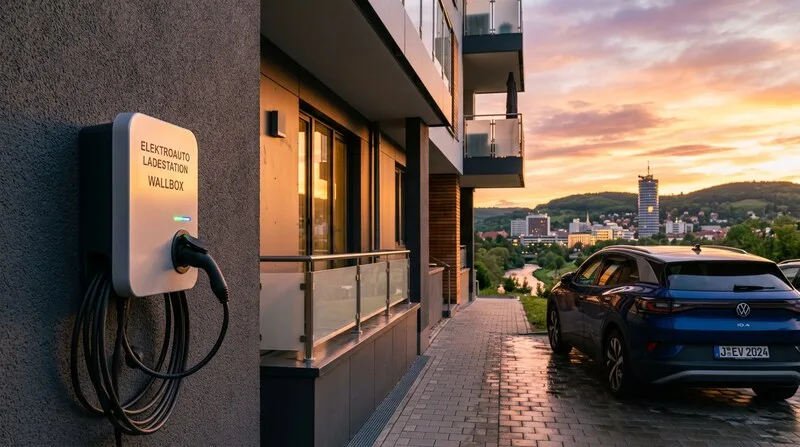
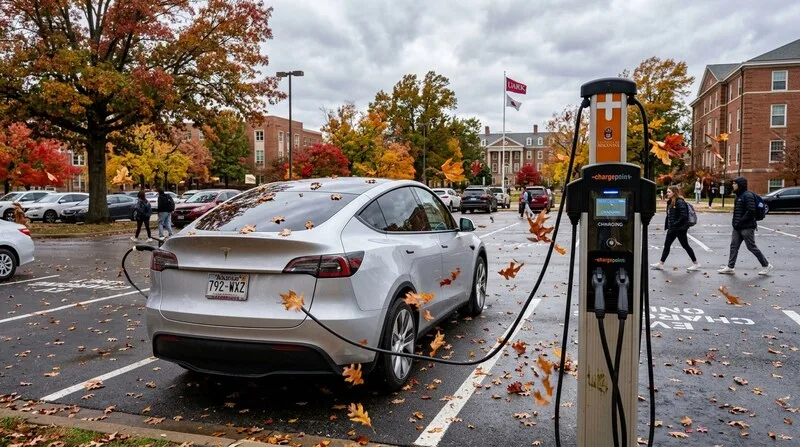
One angle that tends to get overlooked in the broader debate, but matters a lot for anyone tracking charging infrastructure, is this: robotaxi fleets are almost always electric, running around the clock, and need to recharge often and fast. That puts entirely new demands on cities, because a standard home-style charger is a poor fit for this kind of duty cycle. A vehicle that's shuttling between rides in shifts needs a large amount of energy in a short window, not a slow overnight top-up. Fleet operators are increasingly building dedicated high-power charging hubs that look a lot more like commercial charging depots than home setups, complete with high grid connections and their own load-management systems. The guide on Robotaxi Fleets & Charging Infrastructure covers this shift in more depth, and drivers who still rely on a personal EV and home charging can compare notes against the EV fast charging guide.
How Realistic Is a Fast Transition?
Despite the progress, the shift is happening gradually. Both systems compared in the test are confined to clearly defined areas, still require some level of human oversight, and need to rack up far more miles before real scaling becomes possible. In the near term, that mostly means owning a personal EV with reliable home or workplace charging remains the more practical option for most drivers, while robotaxis grow in parallel as a complementary form of urban mobility. Over the long run, though, the balance between ownership and shared, autonomous mobility is likely to shift meaningfully, especially in dense urban areas where a personal car often sits parked for most of the day anyway.
Additional Video
For a real-world, on-the-ground perspective beyond the general explainer, CNBC's ride-along coverage of Tesla's actual robotaxi launch in Austin shows how the technology performs in practice with real passengers and safety monitors.
Source: CNBC – We Went To Austin For Tesla's Robotaxi Launch. Here's What Happened
Frequently Asked Questions
What's the difference between a robotaxi and a car with autopilot?
A car with autopilot assists a human driver who must stay ready to take over at any time. A robotaxi is designed to handle the entire ride without a driver, though some services still carry a safety monitor on board for now.
Do Tesla robotaxis drive completely without a human on board?
That's changing quickly. During the 2025 test described here, a safety monitor still sat in the front passenger seat. Since 2026, a growing portion of Tesla's Austin fleet operates with no safety monitor inside the vehicle at all.
Why doesn't Tesla use LiDAR the way Waymo does?
Tesla deliberately bets on a camera-based approach paired with AI processing, aiming to cut costs and make the technology easier to scale. Waymo instead combines LiDAR, radar, and cameras for more redundant environmental sensing.
Are robotaxis operating in Europe yet?
Not at commercial scale. Countries like Germany have stricter vehicle approval and liability rules than Texas or Arizona, and while pilot projects exist, a full commercial robotaxi rollout across Europe isn't on the horizon yet.