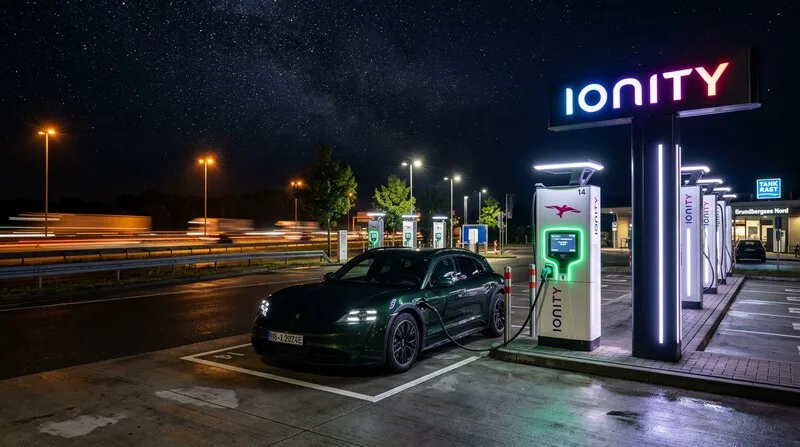
Self-Driving and Electric: Two Trends, One Vehicle
Anyone who has paid attention to self-driving cars over the past few years will have noticed a pattern: almost every robotaxi and almost every autonomous test vehicle runs on electric power. Waymo, Cruise, and Zoox, along with most prototypes from legacy automakers, have committed to battery power instead of a traditional combustion engine. At first glance this can look like pure marketing, two futuristic technologies bundled together for the headlines. In reality, there's a solid technical logic behind it that ties directly into the SAE levels of autonomous driving, and it gets stronger the higher the automation level climbs.
The higher the level, the more responsibility the vehicle itself has to carry, and the less it can rely on an alert human as a fallback. The difference between simple driver assistance and true autonomy comes down to exactly this: a Level 2 system can simply hand control back to the driver if something goes wrong, while a Level 4 or Level 5 vehicle has to keep functioning safely with no driver at all, or bring itself to a safe stop on its own. That requirement raises entirely new questions for a car's electrical system, and it's where the story of why autonomous cars have all but abandoned the combustion engine really begins.
Source: The Buzz EV – Why are so many autonomous vehicles also EVs?
The Technical Reasons: Why Autonomous Systems Need an Electric Drivetrain
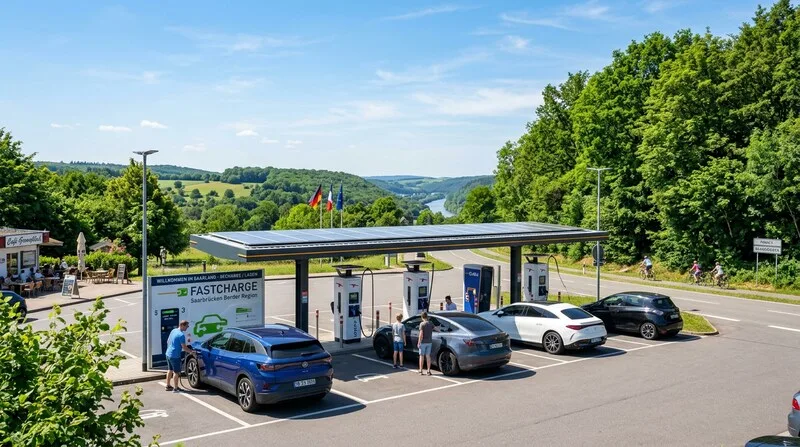
The channel The Buzz EV laid out the core arguments for why electric drive and self-driving technology depend on each other so heavily. At the heart of it are three factors, energy, reliability, and cost, that carry completely different weight in a driverless vehicle than they do in a conventional car with a human behind the wheel.
Dozens of Sensors and an Onboard Computer That Can Never Sleep
A self-driving car doesn't rely on a single sensor system. It fuses lidar, radar, and cameras into one composite picture of its surroundings. Each of those sensors draws power continuously, and on top of that sits a powerful onboard computer processing all those data streams in real time. Unlike a normal car's electronics, this system can't fully shut down while parked, because a robotaxi has to stay responsive at all times even when sitting still, whether that means unlocking a door, recognizing a waiting passenger, or responding to a remote command. Add up the multiple lidar units, dozens of cameras, and radar sensors on a current robotaxi fleet, and the continuous power draw is far beyond what a classic twelve-volt electrical system can efficiently supply, day and night, even while the car is just idling at the curb. The computing power required is roughly comparable to a serious server rack, and it has to be available around the clock, not just while the car is actually driving. A combustion engine paired with a standard starter battery simply isn't built for that kind of constant load: it would have to keep starting and stopping, which brings wear, noise, and emissions. A high-capacity traction battery, by contrast, delivers exactly the power that sensors and compute need in standby mode, continuously and without any mechanical detour.
Sensor Fusion Is the Only Path to Reliable Perception
A single sensor type isn't enough for safe autonomous driving, because every sensor has its own blind spot: cameras struggle in poor light, radar lacks fine detail, and lidar can lose accuracy in heavy rain. The fix is sensor fusion, combining several independent systems into one redundant picture of the world. That boosts safety significantly, but it also drives up power demand, since it's not one system running continuously but several running in parallel. This is another place where an electric drivetrain with a large battery pack is simply the more practical foundation than a car whose electrical system was originally designed for headlights and a radio.
Electric Drive as the Cleanest, Most Reliable Integration
Beyond raw power supply, automakers building autonomous vehicles care about a second factor: an electric drivetrain is widely seen as the simplest, most stable integration with the fewest mechanical failure points. No multi-speed transmission, no complex exhaust system, fewer moving parts that can break down. Once no human can step in the moment something goes wrong, every extra mechanical component becomes a safety risk. An electric drivetrain also lets a computer manage start-stop behavior and energy use with precision and predictability, adding efficiency and sustainability benefits that a combustion-powered autonomous vehicle simply can't match.
The CASE Framework: Four Trends, One Package
The auto industry often bundles this shift under the acronym CASE: Connected, Autonomous, Shared, Electric. The idea is that connectivity, autonomy, shared mobility, and electrification aren't four separate trends but reinforce one another, which is why the industry increasingly develops them as one connected package. A connected, autonomous vehicle runs most efficiently in a shared fleet when it's electric, because charging windows, downtime, and maintenance schedules can all be planned centrally. Current market forecasts point to a steadily rising share of connected, partly automated, electric vehicles among new car sales over the coming years, turning CASE from a slogan into an actual product roadmap for the major automakers.
Just how consistently this logic plays out is obvious in the world's largest robotaxi fleets:
- Waymo has fully retired its original fleet of hybrid Chrysler Pacificas in favor of all-electric Jaguar I-PACE and Zeekr vehicles.
- Cruise (GM) built its autonomous test fleets on all-electric platforms from the start, though it shut down commercial robotaxi operations entirely in late 2024/early 2025.
- Zoox is developing its robotaxi as a purpose-built, fully electric vehicle with no steering wheel at all.
- Regulatory pressure is reinforcing the trend: California's SB 500 requires that autonomous vehicles be zero-emission starting with model year 2031, effectively from 2030 onward.
Looking Ahead: What This Pairing Means for the Future
For fleet operators, going electric with autonomous vehicles increasingly makes economic sense too. Instead of decentralized gas-station logistics with countless individual stops, centralized charging infrastructure fits a driverless fleet with predictable downtime far better. A robotaxi already returns to a home base between rides, and that's exactly where charging can be built directly into daily operations with zero human involvement.
That trend is likely to deepen further in the years ahead. Automakers are already working on concepts for autonomous charging, where a vehicle drives itself to an open charging stall, docks, and rejoins service once it's topped up. That creates a new challenge for cities: large robotaxi fleets place very specific demands on urban charging infrastructure, since many vehicles need power around the same times while trying to lose as little downtime as possible.
The technology side of this pairing is likely to deepen too. Connected vehicles increasingly talk not just to other cars but to charging infrastructure itself, reserving open charging spots or shifting charging sessions into low-traffic windows. Longer term, wireless charging could automate this even further, letting an autonomous vehicle top up its battery with no plug at all. Driver-assist systems like Tesla Full Self-Driving or Mercedes Drive Pilot draw far less power than a fully driverless robotaxi with no steering wheel, but the same underlying trend still holds: the more automation a vehicle carries, the more it benefits from an electric, or at minimum hybrid, drivetrain with a stable electrical architecture. For everyday drivers today, that mostly applies to assistance features well below full autonomy, but the underlying logic doesn't change: the more compute and sensing a vehicle has to keep powered at all times, the more clearly the engineering points toward a strong electric drivetrain instead of a combustion engine.
In the end, the pairing of self-driving technology and electric power isn't a coincidence or a marketing trick. Sensors, onboard computing, safety requirements, and fleet economics all point in the same direction. For EV owners, and for anyone curious about where mobility is headed, it's worth paying attention to charging infrastructure too, since the principles already shaping how robotaxi fleets charge today will increasingly shape how everyday EV owners charge their own cars.
Additional Video
While the first video explains the technical link between self-driving systems and electric powertrains, this Bloomberg report shifts to the business battle among Waymo, Zoox, and Tesla, showing why nearly every serious robotaxi contender has bet on an electric platform to scale.
Source: Bloomberg Television – Waymo, Zoox, Tesla: Who Wins the Robotaxi Race?
Frequently Asked Questions
Why can't self-driving cars just run on a combustion engine?
Technically it's possible, but keeping sensors and the onboard computer powered continuously in standby mode is hard to do stably and efficiently with a classic 12-volt electrical system. A high-capacity battery delivers that power directly, with no extra wear and no detours.
Is every robotaxi actually electric?
Nearly every major operator, including Waymo, Cruise, and Zoox, now runs exclusively on electric power. A handful of early test fleets used hybrid vehicles, but those were gradually phased out in favor of all-electric models.
What does the CASE framework actually mean?
CASE stands for Connected, Autonomous, Shared, and Electric. It describes how connectivity, self-driving technology, shared mobility, and electric drivetrains are increasingly developed by the industry as one connected package, since the four trends reinforce each other.
Does this apply to everyday electric cars with driver-assist systems too?
Yes. Many of the same principles, heavy power draw from sensors and the importance of a stable electrical system, already apply to today's vehicles with advanced driver-assist features, even though they fall well short of full autonomy.