
Self-Driving Cars: What Is Behind the Big Tech Story?
Self-driving, or autonomous, driving describes a vehicle's ability to handle part or all of the driving task without a human behind the wheel actively controlling it. The term gets used loosely to mean "robot cars," but it actually covers a whole spectrum of technology, from basic driver-assist features all the way to driverless robotaxis. That spectrum is defined by the SAE levels, ranging from 0 to 5, which serve as the international standard for classifying how automated a vehicle really is.
For EV drivers, this topic matters for a very practical reason. Autonomous driving features almost always show up first in electric vehicles, because their electrical architecture, onboard computing power, and sensor integration are far easier to build than in a traditional combustion car. At the same time, self-driving technology and charging infrastructure are increasingly converging: future autonomous vehicles are expected to drive themselves to a charger, robotaxi fleets are creating entirely new demands on charging hubs in cities, and concepts like vehicle-to-everything communication and bidirectional charging rely on the same connected-vehicle technology that makes self-driving possible in the first place. If you care about electric mobility, self-driving cars are hard to avoid.
In this cluster, we've pulled together 35 guides across seven major topic areas: the technical fundamentals, a comparison of the leading manufacturers and robotaxi operators, legal questions, the connection to EV charging, real-world experience behind the wheel, and a look ahead at what's coming next. This page is the central entry point from which you can dive into any subtopic that interests you.
Fundamentals & Technology
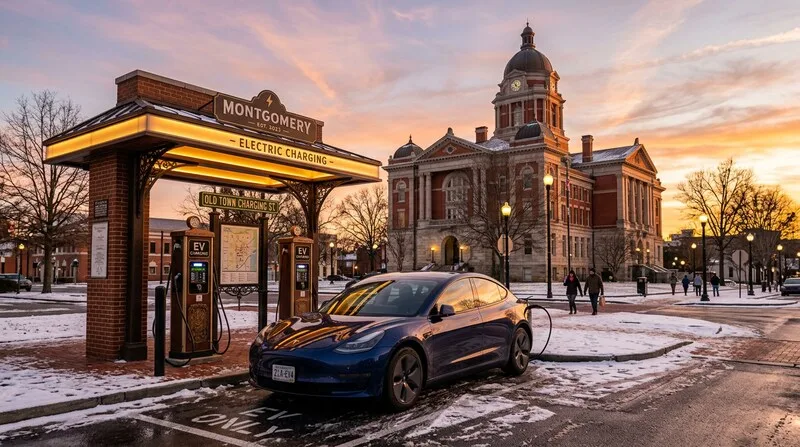
Before getting into specific manufacturers or robotaxis, it helps to understand the technical basics. How does a car actually perceive its surroundings, what role does artificial intelligence play, and where's the line between a basic lane-keeping assist and true self-driving capability? These guides lay the groundwork you'll need for everything else in this cluster.
- SAE Levels of Autonomous Driving Explained
- How Self-Driving Cars See: LiDAR, Radar & Camera
- How AI Learns to Drive
- ADAS vs. Self-Driving Cars
- Sensor Fusion in Self-Driving Cars Explained
Manufacturers & Systems Compared
Few carmakers market self-driving as aggressively as Tesla, but Waymo, Mercedes, and legacy players like BMW, Audi, and VW, along with international competitors such as Zoox and Baidu's Apollo Go, are all developing their own systems with very different approaches. Former robotaxi pioneer Cruise shut down its robotaxi operations at the end of 2024 and has since refocused on driver-assistance systems for GM. The guides below sort out who's actually furthest along technically, and where marketing hype ends and real Level 3 or Level 4 capability begins.
- Tesla Full Self-Driving (FSD) Explained
- How Waymo Robotaxis Work
- Mercedes Drive Pilot Level 3 Explained
- BMW, Audi, VW: Self-Driving Progress
- Zoox, Baidu Apollo Go & Robotaxi Rivals Compared
Robotaxis & Mobility-as-a-Service
Robotaxis are the most visible application of advanced self-driving technology: driverless vehicles hailed by app that carry passengers with no human driver on board. In the US and parts of China, this is already everyday life; in Germany, the first pilot projects are underway. This section covers how robotaxis actually work, what they cost, and whether they could make personal car ownership obsolete in the long run.
- What Is a Robotaxi?
- Waymo One Review: Cities, Cost & Experience
- Robotaxi Laws in Germany & Europe
- Will Robotaxis Replace Car Ownership?
- Robotaxi Cost vs. Car Ownership vs. Taxi
Law, Safety & Approval
Who's liable when a self-driving car causes a crash? How safe are these systems really, compared to human drivers, and how strictly do regulators test new autonomous models before they're allowed on public roads? Self-driving cars raise plenty of open legal and ethical questions, and this section digs into them in detail.
- Self-Driving Car Laws in Germany
- Who Is Liable in a Self-Driving Car Accident?
- Are Self-Driving Cars Safe? The Statistics
- How Self-Driving Cars Get Approved
- The Ethics of Self-Driving Cars
EV Charging & Self-Driving Technology
Self-driving technology and electric mobility are closely intertwined on a technical level: nearly every autonomous vehicle is electric, because an electric drivetrain gives engineers far more precise control over computing power, sensors, and vehicle behavior. At the same time, self-driving is reshaping what charging infrastructure needs to look like, from cars that charge themselves to entire robotaxi fleets that put new pressure on urban charging hubs. This section shows how these two trends are converging.
- Why Self-Driving Cars Are (Almost Always) Electric
- Autonomous Valet Charging Explained
- Robotaxi Fleets & Charging Infrastructure
- Vehicle-to-Everything (V2X) Explained
- Wireless EV Charging: The Future of Plug-Free Charging
Real-World Use, Buying & Daily Driving
Beyond the future-gazing, plenty of drivers have a much more practical question: what can current driver-assist systems actually do today, is retrofitting worth it, and how do autopilot-style features really behave on the highway or on a long road trip? Autonomous freight trucking is part of this everyday-use section too.
- Best Driver Assistance Systems in 2026
- Can You Retrofit Self-Driving Hardware?
- Highway Autopilot: Real-World Test
- Self-Driving Cars on Long-Distance Road Trips
- Autonomous Trucks & the Future of Freight
What's Next
When will Level 5, fully autonomous driving with no restrictions at all, actually arrive? What hurdles still stand in the way for manufacturers and regulators, how will traffic in our cities change, and who's actually winning the race between China, the US, and Europe? This closing section looks ahead, including the harder questions around job losses for taxi and truck drivers.
- When Will Level 5 Autonomous Driving Arrive?
- Future Cities: How Autonomous Cars Change Traffic
- Will Self-Driving Cars Cause Job Losses?
- The Biggest Challenges for Self-Driving Cars
- China vs. USA vs. Europe: The Self-Driving Race
Frequently Asked Questions About Self-Driving Cars
What's the difference between driver-assist systems and true self-driving?
Driver-assist features like lane-keeping assist or adaptive cruise control fall under SAE Levels 1 and 2: a human stays fully responsible and must monitor the vehicle at all times. From Level 3 onward, the system takes full control under specific conditions, and from Level 4 and 5, no human driver is needed at all. For more detail, see our guides on SAE Levels of Autonomous Driving Explained and ADAS vs. Self-Driving Cars.
Is self-driving already legal anywhere?
Yes, in limited form. Mercedes offers an approved Level 3 system, Drive Pilot, on certain German highway stretches, and Germany has had a dedicated legal framework for Level 4 vehicles operating in defined zones since 2021. In the US, companies like Waymo already run fully driverless robotaxi services in several cities under state and local regulatory approval. See our guide on Self-Driving Car Laws in Germany for the details.
Why are almost all self-driving cars electric?
Electric drivetrains can be controlled more precisely and respond faster than combustion engines, and EVs also offer more space and power budget for the enormous computing load that sensors and AI systems require. Read the full explanation in our guide, Why Self-Driving Cars Are (Almost Always) Electric.
As an EV driver, how do I find the right charging station?
No matter how autonomous your car already is, you can find the right charging point near you anytime on our interactive charging map.
Keep Reading: Core EV Charging Topics
Self-driving technology and charging infrastructure go hand in hand. If you're generally interested in EVs and charging, these guides are the right place to start: